
Apamea spaldingi
Smith, 1909
Spalding's Quaker
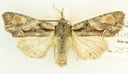
Apamea spaldingi, commonly known as Spalding's Quaker, is a noctuid native to interior western North America. First described by John Bernhardt Smith in 1909, it is a relatively small cutworm moth with distinctive early-season timing compared to . The is recognized by its mottled grey forewings and lighter hindwings.
Pronunciation
How to pronounce Apamea spaldingi: //əˈpeɪ.mi.ə ˈspɔːl.dɪŋ.aɪ//
These audio files are automatically generated. While they are not always 100% accurate, they are a good starting point.
Identification
Distinguished from other Apamea by early season beginning in April. Forewing pattern of grey mottling and streaking with lighter hindwings. Identification to species within the Apamea is challenging due to individual variation and overlapping morphological characters among .
Images
Habitat
Interior western North America; specific microhabitat preferences not documented. Likely associated with grassland, prairie, and open woodland based on regional distribution.
Distribution
Interior western North America. Documented from Alberta and Saskatchewan, Canada. Range extends through western United States, though specific state records not detailed in sources.
Seasonality
season begins early for the , starting in April in some areas. Flight period extends through spring and early summer; specific end date not documented.
Similar Taxa
- Apamea amputatrixYellowheaded ; similar grey mottled forewing pattern and body form. Distinguished by later season and subtle differences in forewing markings, though identification requires expert examination.
- Other Apamea speciesMany share grey mottled forewings, lighter hindwings, and similar size. A. spaldingi is among the earliest-flying in the , which aids in temporal separation.