
Apamea alia
Guenée, 1852
Fox Apamea
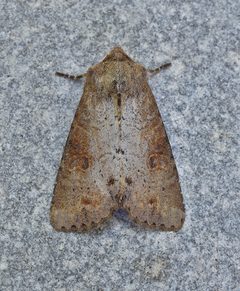
Apamea alia, commonly known as the Fox Apamea, is a noctuid native to North America. have a wingspan of approximately 39 mm and are active from June to August. The larvae feed on various grasses. The exhibits a disjunct distribution, occurring in both eastern and western regions of the continent.

Pronunciation
How to pronounce Apamea alia: /əˈpeɪ.miə ˈeɪ.liə/
These audio files are automatically generated. While they are not always 100% accurate, they are a good starting point.
Identification
Distinguished from similar Apamea by geographic distribution pattern and period. Specific diagnostic characters require examination of genitalia or detailed wing pattern analysis. The combination of eastern and western North American distribution is unusual within the and may aid identification.
Images
Habitat
Grassland and open where larval grasses occur. Specific microhabitat preferences not documented.
Distribution
North America: disjunct eastern and western distribution. Western records from Alberta, Manitoba, and Saskatchewan (Canada). Eastern records include Vermont (USA) and presumably other northeastern states.
Seasonality
fly from June to August, with exact timing varying by location.
Diet
Larvae feed on various grasses (Poaceae). feeding habits not documented.
Host Associations
- Poaceae - larval food plantvarious grass
Life Cycle
Complete with , larva, pupa, and stages. Larvae feed on grasses. Specific details of site and stage not documented.
Behavior
are and attracted to light. Larvae are ground-dwelling or grass-feeding.
Ecological Role
Larvae function as primary consumers in grassland . may serve as prey for .
Human Relevance
No significant documented economic impact. Occasionally encountered by enthusiasts and in biodiversity surveys.
Similar Taxa
- Other Apamea speciesMany Apamea share similar gray-brown forewing patterns and require genital dissection or molecular analysis for definitive identification.
- Noctua pronubaSimilar size and general appearance, but differs in wing pattern details and has more uniform palearctic distribution.
More Details
Taxonomic Note
Originally described as Taeniocampa alia by Guenée in 1852, later transferred to Apamea.
Distribution Pattern
The disjunct eastern-western distribution is notable and may reflect historical biogeographic patterns or inadequate sampling of intervening regions.