Schinia spinosae
Guenée, 1852
Spinose Flower Moth
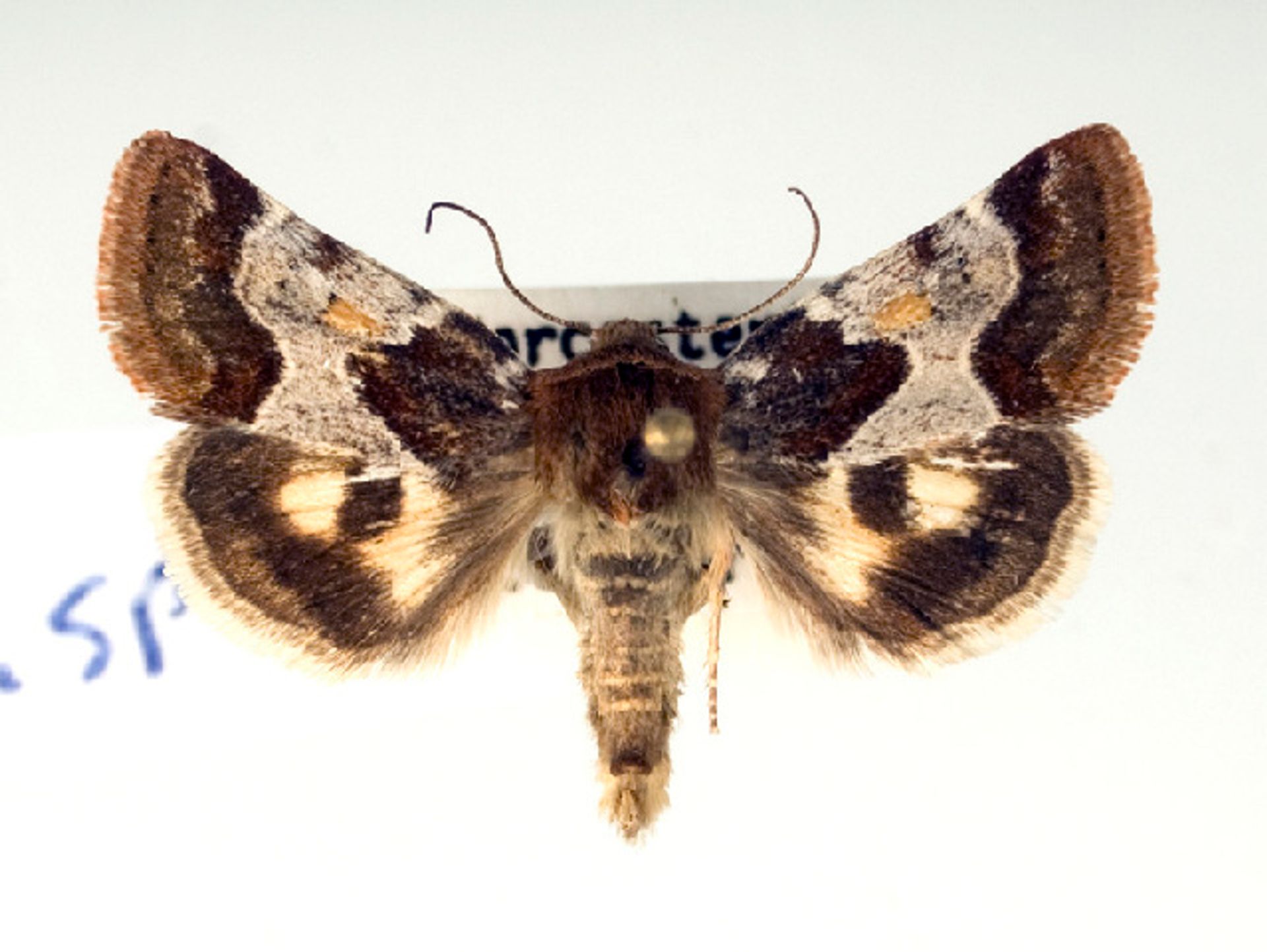
The spinose flower moth (Schinia spinosae) is a small noctuid native to North America. It has a wingspan of approximately 22–24 mm. The is a herbivore whose larvae feed on Polygonella species, with Polygonella articulata documented as a primary in northern portions of its range. are presumably and attracted to light, consistent with other members of the Schinia.
Pronunciation
How to pronounce Schinia spinosae: //ˈʃɪni.ə spɪˈnoʊsi//
These audio files are automatically generated. While they are not always 100% accurate, they are a good starting point.
Identification
The small size (22–24 mm wingspan) and association with Polygonella plants may aid identification. Within the Schinia, which contains over 120 North American , precise identification to species level typically requires examination of genitalia or reference to regional identification guides. No distinguishing external features are explicitly documented for this species in available sources.
Images
Appearance
Small with wingspan of 22–24 mm. Specific coloration and wing patterns are not documented in available sources.
Habitat
Associated with supporting its plant Polygonella, which occurs in sandy or well-drained soils in eastern and central North America. Specific habitat descriptions for the itself are not documented.
Distribution
North America, with confirmed records from New York and Maryland. The full extent of its range is not comprehensively documented.
Diet
Larvae feed on Polygonella ( Polygonaceae), with Polygonella articulata specifically documented as a across much of the northern range. feeding habits are not documented.
Host Associations
- Polygonella articulata - larval Primary in northern portion of range
- Polygonella - larval -level association
Life Cycle
Complete with , larva, pupa, and stages. Specific details of voltinism, stage, and developmental timing are not documented.
Behavior
activity and attraction to light sources has been inferred from observations of and general traits, but specific behavioral documentation for this is lacking.
Ecological Role
As a herbivore on Polygonella, larvae contribute to herbivory pressure on this plant . may serve as when visiting flowers for nectar, though this has not been documented. The functions as prey for various and , typical of small .
Human Relevance
No significant documented interactions with humans. The is of interest to lepidopterists and enthusiasts, particularly during National Moth Week events and similar citizen science initiatives.
Similar Taxa
- Schinia jaguarinaCongeneric flower moth with similar ; both are or flower visitors with larvae feeding on plant flowers and seed pods. S. jaguarina has been documented on Dalea candida and other legumes rather than Polygonella.
- Other Schinia speciesThe contains over 120 North American , many with similar size and general appearance. Most require genitalia examination or plant association for reliable identification.
More Details
Taxonomic History
Originally described as Heliothis spinosae by Guenée in 1852, later transferred to the Schinia. The is classified in the Heliothinae within Noctuidae.
Sources and further reading
- BugGuide
- Wikipedia
- GBIF taxonomy match
- iNaturalist taxon
- NCBI Taxonomy
- Catalogue of Life
- Bug Eric: Wasp Wednesday: Not Wasp VIII
- Catch a Glimpse of Caterpillars During National Moth Week
- Bug Eric: White Prairie Clover: An Awesome Blossom
- Bug Eric: Remembering National Moth Week 2018
- Bug Eric: October 2018
- 2013 Oklahoma Collecting Trip iReport | Beetles In The Bush