
Schinia sanguinea
Geyer, 1832
Bleeding Flower Moth
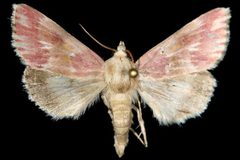
Schinia sanguinea, commonly known as the bleeding flower , is a small noctuid moth native to North America. are active in autumn, primarily September through October, and are characterized by their distinctive pinkish-red forewings with darker markings. The is notable for its specialized larval association with Liatris (blazing star) species, where caterpillars feed on developing flowers and seed . The moth occupies a broad geographic range across eastern and central North America, with a disjunct in Ontario.
Pronunciation
How to pronounce Schinia sanguinea: /ˈskiː.ni.ə sæŋˈɡwɪn.i.ə/
These audio files are automatically generated. While they are not always 100% accurate, they are a good starting point.
Identification
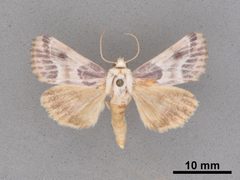
Distinguished from by the combination of pinkish-red forewing coloration with dark markings and autumn period. Schinia carmosina, formerly considered a synonym, has been elevated to status and differs in genitalic structure and subtle coloration differences. Other similar Schinia species typically show different color patterns (yellow, white, or brown ) or occur in different seasons. Examination of genitalia may be necessary for definitive identification where ranges overlap with similar species.
Images
Habitat
Prairie and grassland , particularly where plants (Liatris ) occur. Associated with open, sunny environments including native prairies, meadows, and occasionally disturbed grasslands. Elevational range not well documented but occurs across plains and lower montane regions.
Distribution
Eastern and central North America: from North Carolina south to Florida, west to Texas, and north to Montana. Disjunct present in Ontario, Canada. Absent from far western North America and most of the Northeastern seaboard north of North Carolina.
Seasonality
active from September to October. Single brooded (). Larval stage occurs during summer months, coinciding with flowering and seed development of plants.
Diet
Larvae feed on flowers and developing seed of Liatris (blazing stars, gayfeathers). feeding habits not documented; presumed to take nectar from flowers including those of plants.
Host Associations
- Liatris - larval food plantMultiple ; larvae feed on flowers and seed
Life Cycle
Complete with four stages: , larva, pupa, . Eggs laid on or near plant flowers. Larvae feed on developing flowers and seeds, passing through multiple instars. occurs in soil or leaf litter. stage presumed to be pupa, with adults emerging in autumn.
Behavior
are but may be active at dusk. Attracted to light. Resting posture with wings folded tent-like over body. Larval involves feeding within flower , often concealed among florets.
Ecological Role
As a herbivore, larvae contribute to seed on Liatris, potentially influencing plant reproductive success. may serve as when visiting flowers for nectar. Serves as prey for including birds, bats, and insectivorous arthropods.
Human Relevance
No direct economic importance. Occasionally encountered by prairie ecologists and lepidopterists. Potential for prairie quality due to specialized association. Not known to be of conservation concern rangewide, though local may be vulnerable to prairie habitat loss.
Similar Taxa
- Schinia carmosinaFormerly synonymized; now recognized as distinct based on genitalic differences and subtle color variation
- Schinia bimatrisSimilar size and but shows different forewing pattern with more prominent white markings
- Schinia floridaOverlapping range but typically brighter pink with different marking arrangement
More Details
Taxonomic history
Schinia carmosina was recently elevated from synonymy, clarifying that reports of S. sanguinea from some areas may refer to this distinct .
Host plant specificity
The association with Liatris appears obligate; no alternative records are known.
Sources and further reading
- BugGuide
- Wikipedia
- GBIF taxonomy match
- iNaturalist taxon
- NCBI Taxonomy
- Catalogue of Life
- How many non-native flatworms are in your garden...? - Buglife Blog - Buglife
- Forget crawling to the “Ugly Bug Ball”, let’s talk slipping and sliding along to the Slug Disco! - Buglife Blog - Buglife
- Bug Eric: Wasp Wednesday: Not Wasp VIII
- Catch a Glimpse of Caterpillars During National Moth Week
- Save wildlife - close the UK borders to plants - Buglife Blog - Buglife
- Bug Eric: White Prairie Clover: An Awesome Blossom