
Schinia florida
Guenée, 1852
Primrose Moth
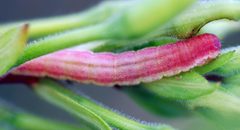
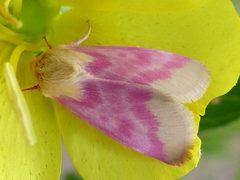
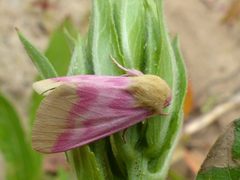
Schinia florida, commonly known as the Primrose , is a noctuid moth native to temperate North America. display distinctive pink and yellow coloration, with pink forewings marked by pale yellow patterns and a creamy white . The exhibits highly specialized ecological relationships: larvae feed exclusively on evening-primroses (Oenothera spp.), and adult is precisely synchronized with the flowering period of their plants. The moth has a single , with adults active during summer months when evening-primroses are in bloom.
Pronunciation
How to pronounce Schinia florida: /ˈskiːn.i.ə ˈflɔr.ɪ.də/
These audio files are automatically generated. While they are not always 100% accurate, they are a good starting point.
Identification
Distinguished from similar Schinia by combination of pink forewings with pale yellow markings, creamy white hindwings, and pink . The specific association with evening-primrose flowers (Oenothera spp.) provides additional diagnostic context. Similar pink-colored noctuids in the may overlap in range but differ in precise wing pattern and plant associations.
Images
Habitat
Open supporting evening-primrose , including prairies, meadows, roadsides, and disturbed areas. Strongly tied to presence of larval plants (Oenothera spp.) in sunny, relatively open conditions.
Distribution
Temperate North America from Alberta to Nova Scotia, south to northern Florida and Texas. Absent from the Pacific coast. Core distribution spans the Great Plains, Midwest, and eastern North America.
Seasonality
Single per year (). period synchronized with evening-primrose flowering, typically mid-summer (June–August depending on latitude). hatch 4–5 days after oviposition. Larval development completed before autumn; pupae overwinter underground.
Diet
Larvae are herbivores feeding on evening-primroses (Oenothera spp.). have been observed resting in evening-primrose flowers; adult feeding habits not explicitly documented.
Host Associations
- Oenothera spp. - larval laid on flower buds; larvae feed on developing flowers and fruits
Life Cycle
Complete with one annually. deposited on flower buds of evening-primroses. Larvae progress through five instars, then burrow into soil to pupate. Pupal stage overwinters; timed to coincide with plant flowering the following summer.
Behavior
are . During daylight hours, adults frequently rest inside evening-primrose flowers, where their pink and yellow coloration provides effective camouflage. Adults are attracted to light. and reproductive activity closely synchronized with of larval plants.
Ecological Role
herbivore tightly linked to evening-primrose . Likely serves as prey for various including birds, bats, and predatory arthropods. Role in pollination of plants not established.
Human Relevance
Occasional subject of natural history observation and photography due to attractive coloration and accessible daytime resting in conspicuous flowers. No significant economic impact; neither pest nor beneficial in agricultural contexts.
Similar Taxa
- Other Schinia speciesMany Schinia share pink or yellow coloration and flower-associated habits; precise wing pattern, plant specificity, and geographic distribution distinguish S. florida
More Details
Etymology
Specific epithet 'florida' refers to the state of Florida, where the was presumably first collected or noted, though the name predates modern understanding of its broader North American distribution.
Sources and further reading
- BugGuide
- Wikipedia
- GBIF taxonomy match
- iNaturalist taxon
- NCBI Taxonomy
- Catalogue of Life
- seed bugs | Beetles In The Bush
- Bug Eric: October 2018
- Bugs in Orange and Black, Part II: A spooky southern predator heads north in a warming world – Florida predatory stink bug, Euthyrhynchus floridanus — Bug of the Week
- Another Invasive Mosquito Species Arrives in Florida
- The (almost) Florida-endemic Cicindelidia scabrosa | Beetles In The Bush
- Another Non-Native Mosquito Species Adds to Growing List in Florida