Schinia pulchripennis
Grote, 1874
Common Flower Moth
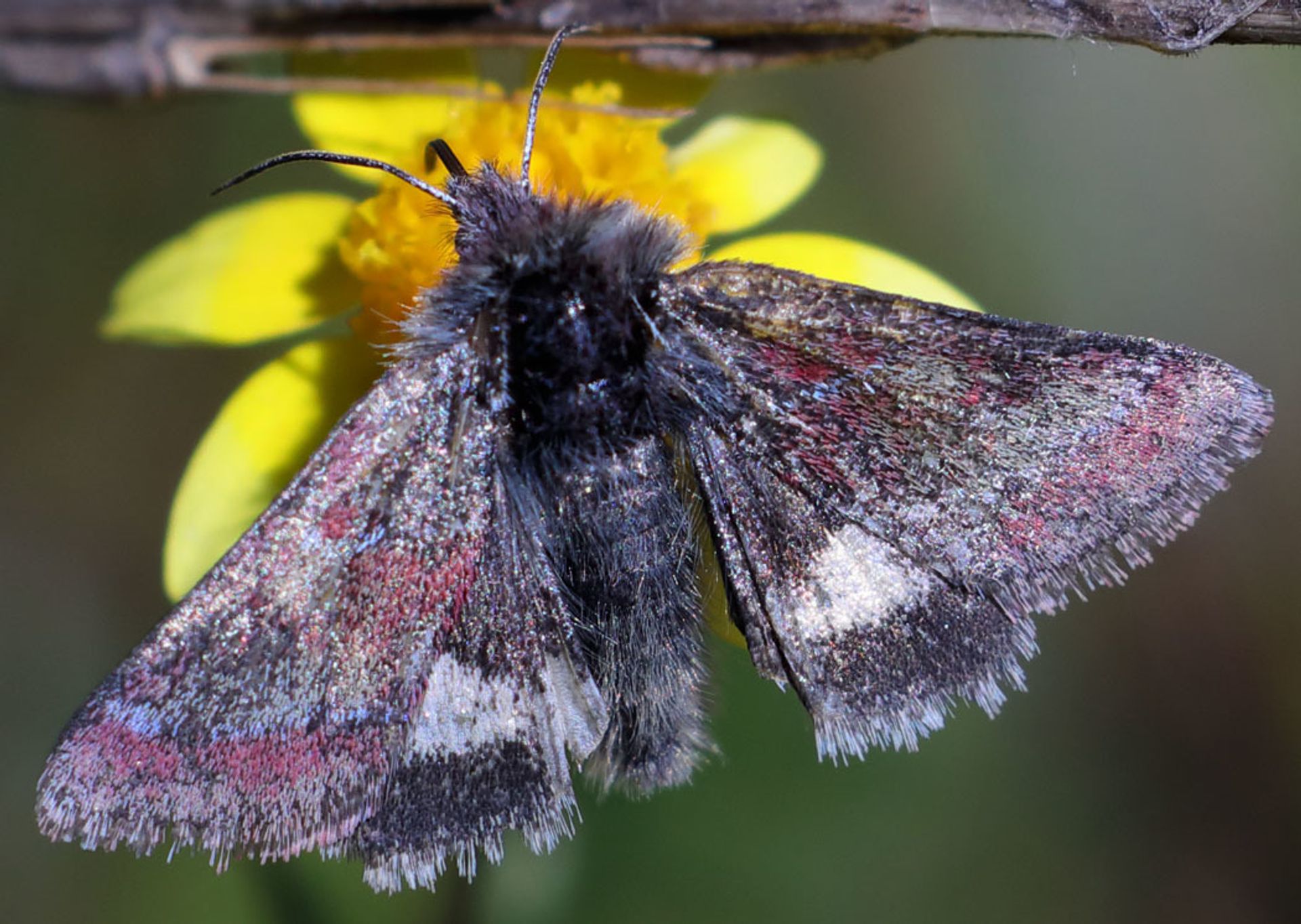
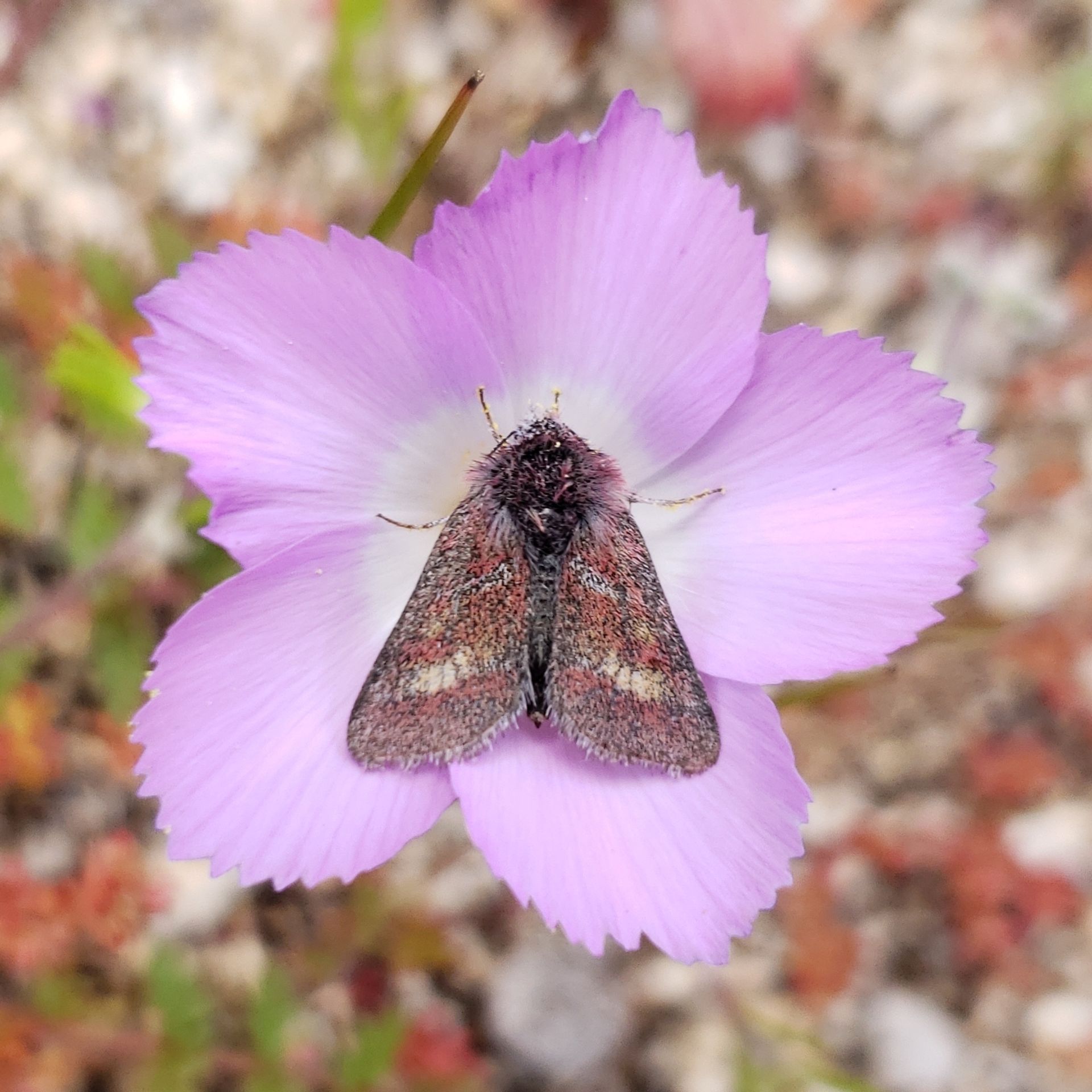
Schinia pulchripennis, commonly known as the common flower , is a small noctuid moth distributed across North America. The exhibits striking in wing coloration, with males displaying magenta forewings and females showing more subdued patterns. Both larvae and maintain close ecological ties to their plant, Orthocarpus purpurascens (owl's clover), with larvae feeding internally on seeds and adults often resting on blossoms where their coloration provides camouflage. The species has been well-studied for its specialized and reproductive .
Pronunciation
How to pronounce Schinia pulchripennis: /ˈskiːniə pʊlˌkrɪˈpɛnɪs/
These audio files are automatically generated. While they are not always 100% accurate, they are a good starting point.
Identification
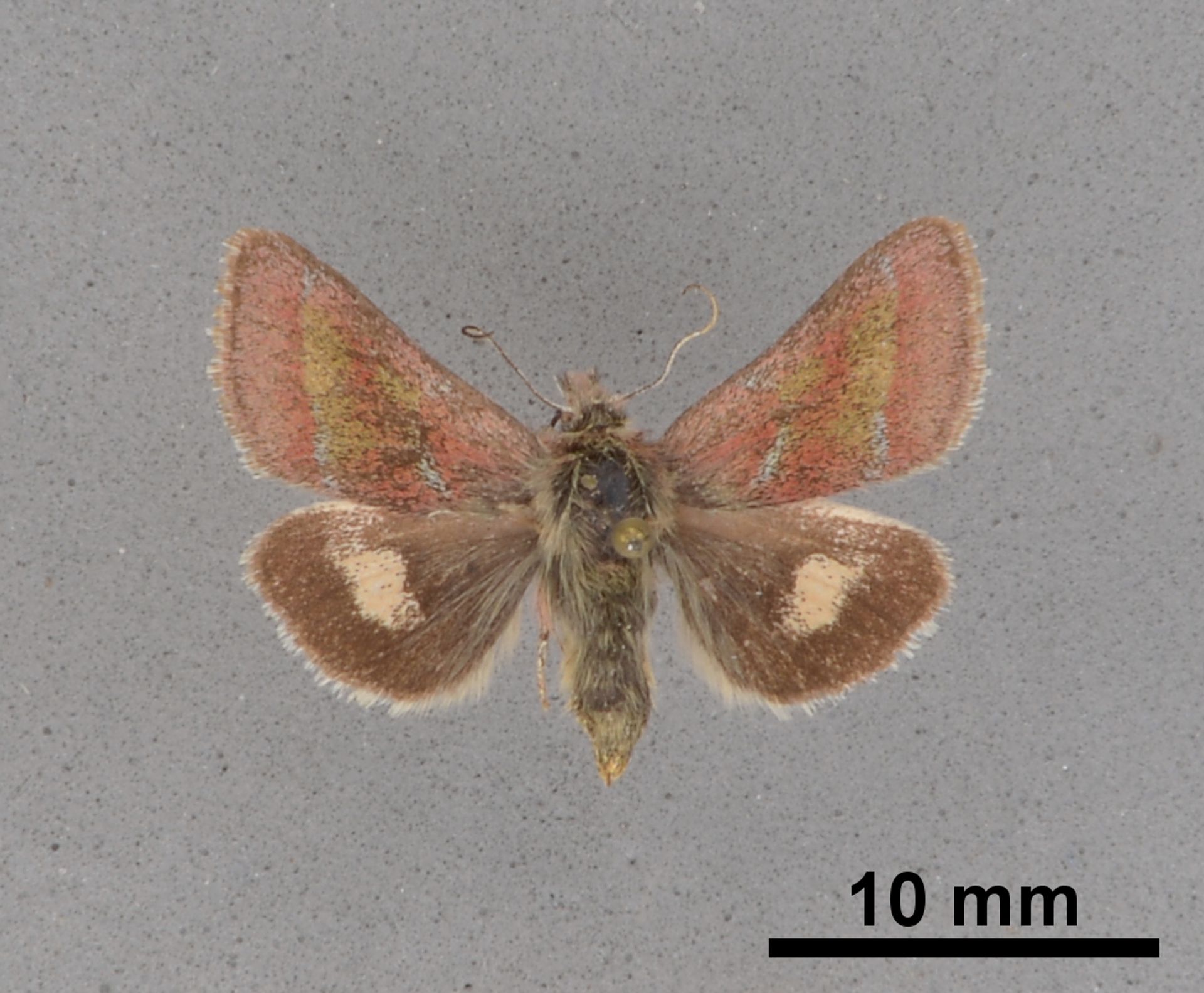
Distinguished from other Schinia by the combination of magenta forewings with pale yellow patches and dark brown hindwings with white center. The purple-grey-black thoracic hair pattern is distinctive. Similar species in the Schinia may share flower-associated habits but differ in coloration; S. pulchripennis specifically associates with Orthocarpus purpurascens blossoms, aiding field identification. Males are more vividly colored than females, which may appear duller and more brownish.
Images
Appearance
Small with wingspan of 17–21 mm. Forewings magenta with pale yellow regions in males; hindwings dark brown with white center. dorsally covered with purple, grey, and black hair; thorax and with yellow hair. present: females exhibit less vivid coloration than males. Larvae develop cryptic coloration and spot pattern by fourth or fifth instar, blending with plant blossoms.
Habitat
Desert and cismontane regions of California, including Mojave Desert. Associated with open, dry where plant Orthocarpus purpurascens occurs. Larval habitat specifically within seed capsules and flower of host plant.
Distribution
North America, with documented occurrence in California, Nevada, and adjacent regions. Distribution closely tracks that of primary plant Orthocarpus purpurascens.
Seasonality
emerge from pupae in spring or winter following sufficient rainfall to germinate plant seeds. Adult activity period corresponds with host plant blooming period, approximately spring through early summer. Larval development lasts approximately 28.5 days.
Diet
Larvae are seed , feeding on developing seeds within capsules of Orthocarpus purpurascens (Orobanchaceae); also recorded from Castilleja exserta. feed on nectar from multiple plant including Allium amplectens, Cryptantha spp., Lasthenia californica, Layia fremontii, and Layia platyglossa.
Host Associations
- Orthocarpus purpurascens - primary plant (larval food source, mating and oviposition site)Also known as Castilleja exserta; larvae feed on seeds, rest on blossoms
- Allium amplectens - nectar source
- Cryptantha spp. - nectar source
- Lasthenia californica - nectar source
- Layia fremontii - nectar source
- Layia platyglossa - nectar source
Life Cycle
Females lay large between blossom and bract of plant. Eggs initially pale yellow, browning during incubation; capsules and prothoracic shields visible before hatching. Larvae hatch and move to seed capsule, feeding internally for approximately 28.5 days through five instars. Fourth and fifth instar larvae emerge from capsules to feed on flower heads and seeds, developing cryptic coloration matching host blossoms. Fully mature larvae drop to ground and tunnel into soil to pupate. emerge when rainfall permits host plant seed germination, typically spring or winter.
Behavior
Females remain at plant blossoms awaiting males for mating. often rest on host plant flowers where coloration provides camouflage. Larvae exhibit site-specific feeding , initially remaining within seed capsules before emerging to feed on flower . Late-instar larvae avoid through flower-mimicking coloration and spot patterns.
Ecological Role
herbivore and seed of Orthocarpus purpurascens. nectar-feeding may contribute to pollination of multiple plant . Larval seed likely influences plant reproductive success and .
Human Relevance
Subject of ecological and behavioral research due to specialized plant association. Collected by lepidopterists; referenced in National Week documentation as example of flower-associated moth diversity.
Similar Taxa
- Other Schinia speciesShare flower-associated resting and similar body plan, but distinguished by specific wing coloration (magenta forewings with pale yellow patches) and plant association with Orthocarpus purpurascens
- Schinia jaguarinaSimilar flower- habit and activity, but differs in coloration and plant preferences; S. jaguarina associated with Dalea and other legumes
More Details
Reproductive strategy
Females exhibit relatively low (tens to hundreds of ) compared to some related noctuids, producing larger eggs as a trade-off. This strategy correlates with specialized plant utilization and precise oviposition placement.
Sources and further reading
- BugGuide
- Wikipedia
- GBIF taxonomy match
- iNaturalist taxon
- NCBI Taxonomy
- Catalogue of Life
- Bug Eric: Wasp Wednesday: Not Wasp VIII
- Catch a Glimpse of Caterpillars During National Moth Week
- Bug Eric: White Prairie Clover: An Awesome Blossom
- Bug Eric: Remembering National Moth Week 2018
- Bug Eric: October 2018
- 2013 Oklahoma Collecting Trip iReport | Beetles In The Bush