
Schinia lucens
Morrison, 1875
Leadplant Flower Moth, False Indigo Flower Moth
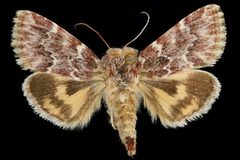
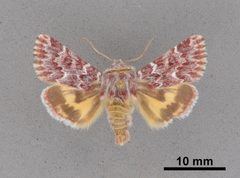
Schinia lucens is a small noctuid with distinctive mottled pink coloration. The was first described by Herbert Knowles Morrison in 1875. It is known from the central and western United States, where it is closely associated with Amorpha plants. have a wingspan of approximately 25–28 mm and are active during summer months.
Pronunciation
How to pronounce Schinia lucens: /ˈskiː.ni.ə ˈluː.kɛns/
These audio files are automatically generated. While they are not always 100% accurate, they are a good starting point.
Identification
The combination of small size (25–28 mm wingspan), mottled pink coloration, and association with Amorpha flowers distinguishes this from similar Schinia. The pink mottling is distinctive among North American noctuids. Similar species in the Schinia may share flower-associated habits but differ in color pattern and plant specificity.
Images
Appearance
Small with mottled pink coloration. Wingspan approximately 25–28 mm. The pink patterning provides camouflage when resting on plant flowers.
Habitat
Prairie and grassland where plants Amorpha canescens and related occur. Associated with leadplant and false indigo vegetation.
Distribution
Central and western United States. Records include states from the Great Plains westward, with northern extent into Manitoba, Canada.
Seasonality
One per year. active during summer months, with tied to flowering period of plants.
Diet
Larvae feed on Amorpha , especially Amorpha canescens (leadplant). Larvae are well-camouflaged on plant foliage. feeding habits not documented.
Host Associations
- Amorpha canescens - larval Primary plant; larvae feed on foliage and are well-camouflaged
- Amorpha species - larval -level association documented
Life Cycle
One per year (). Complete with , larva, pupa, and stages. Larval stage feeds on plant foliage.
Behavior
rest on plant flowers, where their pink mottled coloration provides camouflage. Larvae feed on host plant foliage and seed pods.
Ecological Role
Herbivore specializing on Amorpha legumes. Contributes to pollination of plants through flower visitation. Serves as prey for and .
Human Relevance
Subject of interest to lepidopterists and naturalists. references its association with leadplant (Amorpha canescens), a prairie legume used in restoration and native plant landscaping. Not considered an agricultural pest.
Similar Taxa
- Schinia jaguarinaAlso in Schinia and associated with Dalea flowers; differs in color pattern and plant specificity
- Other Schinia speciesMany Schinia share flower-associated resting and similar size; distinguished by color pattern and plant associations
More Details
Taxonomic history
Originally described as Heliothis lucens by Morrison in 1875, later transferred to Schinia. The epithet 'lucens' (Latin for 'shining' or 'bright') may refer to the appearance of the pink coloration.
Conservation status
Not formally assessed; appears secure within its range but dependent on prairie and Amorpha plants, which have declined due to habitat conversion.
Sources and further reading
- BugGuide
- Wikipedia
- GBIF taxonomy match
- iNaturalist taxon
- NCBI Taxonomy
- Catalogue of Life
- Bug Eric: Wasp Wednesday: Not Wasp VIII
- Catch a Glimpse of Caterpillars During National Moth Week
- Bug Eric: White Prairie Clover: An Awesome Blossom
- Bug Eric: Remembering National Moth Week 2018
- Bug Eric: October 2018
- 2013 Oklahoma Collecting Trip iReport | Beetles In The Bush