
Grotellaforma lactea
(Stretch, 1885)
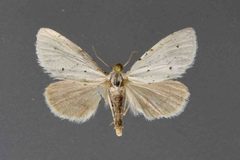
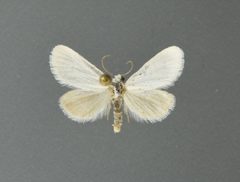
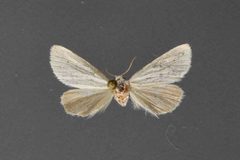
Grotellaforma lactea is a small noctuid described by Stretch in 1885. The was originally placed in the Cisthene before being transferred to the genus Grotellaforma. It is known from arid regions of the southwestern United States, with collected in California and Arizona. The specific epithet 'lactea' refers to the milk-white coloration of the .
Pronunciation
How to pronounce Grotellaforma lactea: //ɡroʊˌtɛləˈfɔːrmə lækˈtiːə//
These audio files are automatically generated. While they are not always 100% accurate, they are a good starting point.
Identification
The pale, nearly unmarked white wings distinguish Grotellaforma lactea from most other small noctuids in its range. It may be confused with pale forms of Cisthene , from which it was historically separated, but G. lactea lacks the pink or orange costal shading often present in Cisthene. The Grotellaforma is , so any matching this description within the known range is likely this species. Genitalia examination may be required for definitive separation from similar pale noctuids.
Images
Appearance
are small with predominantly white to pale cream forewings. The wings lack strong patterning, appearing relatively uniform in color with subtle darker shading toward the margins. The body is slender and similarly pale. Wing shape is typical for the Grotellinae, with somewhat pointed forewings. are . Overall size is small for Noctuidae, consistent with related grotelline moths.
Habitat
Found in arid and semi-arid environments of the southwestern United States. Associated with desert scrub and dry open . Specific plant requirements are not documented, but related grotelline often occur in areas with abundant low-growing herbaceous vegetation.
Distribution
Documented from southern California and Arizona, USA. The type locality is in California. Distribution appears restricted to the Mojave and Sonoran desert regions and adjacent areas. Records are sparse, suggesting either genuine rarity or undercollection due to habits and cryptic coloration.
Seasonality
activity period is not well documented. Most records appear to be from spring and early summer, though this may reflect collector activity rather than true seasonality. As a desert-adapted , adults likely emerge following winter and spring rains.
Behavior
are and attracted to light. Specific behavioral observations are limited due to the ' apparent rarity in collections. Like other small noctuids, adults likely rest with wings folded roof-like over the body during daylight hours.
Ecological Role
Role in is poorly documented. As a small herbivorous or detritivorous larva (specific feeding mode unknown), it likely contributes to nutrient cycling and serves as prey for . No specialized ecological interactions have been described.
Human Relevance
No significant economic or cultural importance. Occasionally encountered by collectors and researchers working on southwestern noctuid fauna. The is of minor interest to lepidopterists due to its taxonomic history and restricted distribution.
Similar Taxa
- Cisthene speciesHistorically confused with Cisthene due to similar size and pale coloration; separated based on genitalia and lack of pink/orange forewing markings
- Other Grotellinae members share small size and slender build, but G. lactea is distinguished by its nearly unmarked white wings
More Details
Taxonomic History
Originally described as Cisthene lactea by Stretch in 1885. The was later transferred to the Grotellaforma based on distinct genitalic characters. The genus name reflects its similarity to Grotella while maintaining separate generic status.
Conservation Status
Not formally assessed. The limited number of records (39 observations on iNaturalist as of source date) suggests it may be naturally uncommon or locally distributed, but insufficient data exist to evaluate trends.