
Grotella
Harvey, 1875
Species Guides
13Grotella is a of owlet moths in the Noctuidae, first described by Leon F. Harvey in 1875. The genus comprises approximately 20 described distributed primarily in North America. These are and are frequently attracted to artificial light sources. The genus belongs to the Grotellinae, which is named after this genus.
Pronunciation
How to pronounce Grotella: //ɡroʊˈtɛlə//
These audio files are automatically generated. While they are not always 100% accurate, they are a good starting point.
Identification
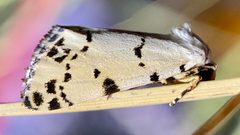
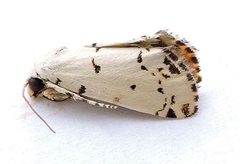
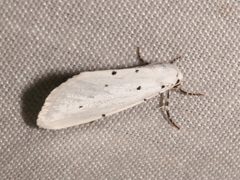
Members of Grotella can be recognized as small to medium-sized noctuid . Grotella septempunctata, the type , has seven dark spots on the forewings corresponding to its specific epithet. Accurate species-level identification within the requires examination of genitalia and reference to original species descriptions.
Images
Distribution
The Grotella occurs in North America, with ranging across the United States and into adjacent regions. Specific distribution data varies by species; Grotella septempunctata has been recorded in Colorado.
Seasonality
are active during summer months. Grotella septempunctata has been observed in July in Colorado.
Behavior
are and attracted to ultraviolet and mercury vapor lights. This has been documented during survey events.
Similar Taxa
- Other Noctuidae generaGrotella resemble other small owlet moths in general appearance. The seven-spotted pattern of G. septempunctata may help distinguish it from some , though definitive identification requires detailed examination.
More Details
Taxonomic History
The was established by Leon F. Harvey in 1875 with Grotella septempunctata as the type . The Grotellinae is named after this genus.
Research Opportunities
Many aspects of Grotella remain poorly documented. The larval , complete , and precise geographic ranges of most are not well established in published literature.