
Perigea
Guenée, 1852
Species Guides
3- Perigea enixa
- Perigea
- Perigea xanthioides(Red Groundling Moth)
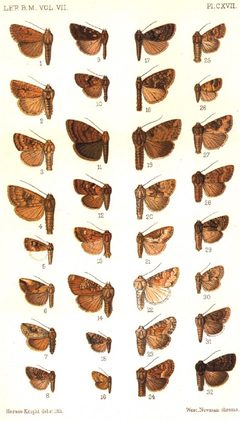
Perigea is a of in the Noctuidae, Condicinae, erected by Achille Guenée in 1852. The genus contains approximately 50 described distributed across tropical and subtropical regions of the Americas, Africa, and Asia. Species exhibit considerable diversity in wing pattern and coloration. The genus has been recorded from diverse including lowland rainforests, dry forests, and subtropical woodlands.


Pronunciation
How to pronounce Perigea: //pɛˈrɪdʒiə//
These audio files are automatically generated. While they are not always 100% accurate, they are a good starting point.
Images
Habitat
have been recorded from tropical and subtropical forests, including lowland rainforests in the Neotropics, dry forests in Central America, and subtropical woodlands in the southeastern United States. Some species occur in African savanna-woodland mosaics and Madagascar's varied forest .
Distribution
Widespread in tropical and subtropical regions: Americas (southern United States through Mexico, Central America, Caribbean islands, and South America to Argentina), sub-Saharan Africa (Cameroon, Uganda, Kenya, eastern Africa, Natal), Madagascar, and parts of Asia (India, Borneo, New Guinea).
Similar Taxa
- XyleniniSome Perigea were historically confused with Xylenini due to similar forewing pattern elements, but Perigea can be distinguished by male genitalic structures and the presence of specific wing pattern characteristics in the Condicinae.
- NoctuiniSuperficially similar in general body form and habits, but Perigea lacks the characteristic forewing venation and tympanic organ modifications typical of Noctuini.
More Details
Taxonomic History
The has undergone significant taxonomic revision. Hampson (1908) treated many now in Perigea under related genera. Modern classification places Perigea in the Condicinae, though some historical treatments placed related species in Cuculliinae or other noctuid subfamilies based on superficial similarities.
Species Diversity
The shows notable in the Neotropics, particularly in Brazil (Rio de Janeiro, São Paulo, Paraná), with secondary centers in Central America and Mexico. The disjunct distribution between the Americas and the Old World suggests either ancient vicariance or multiple events, though phylogenetic relationships within the genus remain incompletely resolved.