
Androloma disparata
(H. Edwards, 1884)
Disparate Forester
Pronunciation
How to pronounce Androloma disparata: //ˌæn.drəˈloʊ.mə dɪˈspɛər.ə.tə//
These audio files are automatically generated. While they are not always 100% accurate, they are a good starting point.
Identification
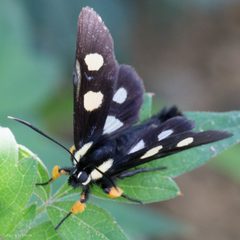
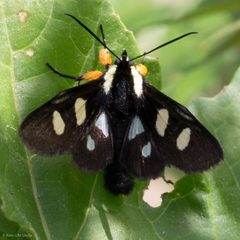
Males can be identified by the combination of raised forewing bump with underlying white streak, creamy shoulder pads, and paired white wing spots. Distinguished from related Alypia by these specific markings and geographic range.
Images
Appearance
Sexually dimorphic. Males possess a raised bump on the forewings with a white streak underneath. Body primarily black with creamy shoulder pads. Two white spots present on each wing. Female not described in available sources.
Distribution
Mexico and Texas, USA.
Diet
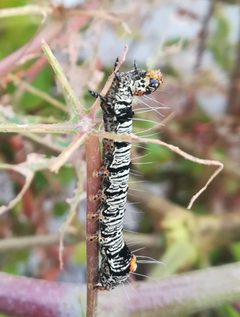
Larvae feed on plants in the Vitaceae , specifically pepper vine (Ampelopsis arborea). diet unknown.
Host Associations
- Ampelopsis arborea - larval commonly called pepper vine
Similar Taxa
- Alypia octomaculataSimilar (formerly congeneric), distinguished by different wing pattern and distribution
- Alypia ridingsiiSimilar (formerly congeneric), distinguished by different wing pattern and distribution