
Acronicta noctivaga
Grote, 1864
night-wandering dagger moth
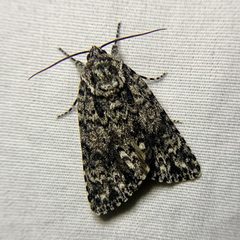
Acronicta noctivaga is a small noctuid commonly known as the night-wandering dagger moth. It occurs in north-eastern North America with active during late spring through summer. The has been recorded feeding on poplar as a larva. The references both its activity and the dagger-like markings typical of the .
Pronunciation
How to pronounce Acronicta noctivaga: /æˈkrɒnɪktə nɒkˈtɪvɪɡə/
These audio files are automatically generated. While they are not always 100% accurate, they are a good starting point.
Identification
The can be distinguished from other Acronicta by its combination of small size (wingspan ~32 mm), north-eastern North American distribution, and period from May to August. Accurate identification to species level typically requires examination of genitalia or molecular analysis, as many Acronicta species are superficially similar.
Images
Habitat
associations are not explicitly documented. Based on recorded plant (poplar), the likely occurs in deciduous woodlands, riparian areas, and other habitats where poplar trees are present.
Distribution
North-eastern North America. Documented occurrences include Wisconsin, New York, Maryland, and Ontario in Canada. GBIF records also indicate presence in Manitoba, Saskatchewan, and Vermont.
Seasonality
are on wing from May to August, with exact timing varying by location. This represents a typical single-brooded or partially double-brooded pattern for northern noctuid .
Diet
Larval food plants include poplar (Populus ). feeding habits are not documented.
Host Associations
- Populus - larval food plantRecorded as food plant for caterpillars
Life Cycle
Complete with , larva, pupa, and stages. Specific details of development duration, stage, and number of per year are not documented.
Behavior
are and attracted to light. Specific behavioral details beyond period are not documented.
Ecological Role
Larvae function as herbivores on poplar foliage. may serve as prey for and as potential , though specific ecological interactions are not documented.
Human Relevance
Not documented as an agricultural pest or otherwise economically significant. The may be encountered by enthusiasts and naturalists during blacklighting surveys.
Similar Taxa
- Acronicta betulaeBirch dagger moth, another small eastern North American Acronicta ; distinguished by association with birch rather than poplar as larval
- Acronicta radcliffeiRadcliffe's dagger moth, found in similar ; specific distinguishing characters require detailed examination
- Other Acronicta speciesMany in this are morphologically similar and require expert examination for accurate identification; plant association and geographic range provide useful clues
More Details
Taxonomic note
Acronicta noctivaga was described by Augustus Radcliffe Grote in 1864. The specific epithet 'noctivaga' translates to 'night-wandering,' reflecting the 's habits.
Data gaps
Significant gaps exist in published knowledge for this , including detailed larval description, pupal characteristics, precise requirements, and full geographic range boundaries.