
Acronicta marmorata
Smith, 1897
marble dagger moth, Marbled Oak Dagger
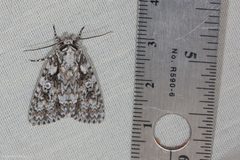
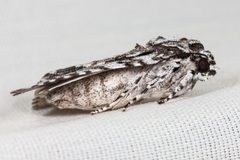
Acronicta marmorata, commonly known as the marble dagger or Marbled Oak Dagger, is a noctuid moth native to western North America. The species is characterized by its marbled wing pattern and moderate size, with a wingspan of approximately 43 mm. are active during mid-summer months, with larvae specializing on oak foliage.

Pronunciation
How to pronounce Acronicta marmorata: //æˈkrɒnɪktə mɑːmɔːˈrɑːtə//
These audio files are automatically generated. While they are not always 100% accurate, they are a good starting point.
Identification
The can be distinguished from other dagger moths in the Pacific Northwest by its marbled gray forewing pattern combined with its specific geographic range. Similar species such as Acronicta americana (American dagger moth) occur in different regions and show different wing patterns. Acronicta betulae (birch dagger moth) has a more eastern distribution and different associations. Examination of genitalia may be required for definitive identification of similar Acronicta species.
Images
Appearance
have a wingspan of approximately 43 mm. The forewings display a marbled pattern of gray and darker markings, typical of the dagger group. The 'marble dagger moth' refers to this mottled wing appearance. Like other Acronicta , the wings may show subtle pattern variations between individuals.
Habitat
Associated with oak woodlands and forests where trees occur. The inhabits areas supporting Quercus species, particularly in mesic to dry forest conditions typical of the Pacific Northwest.
Distribution
Widespread in the Pacific West of North America. Documented from British Columbia, Canada south through Washington and Oregon in the United States. GBIF records confirm presence in North America.
Seasonality
are on wing from July to August, with exact timing varying by location within its range.
Diet
Larvae feed on oak (Quercus), including white oak. feeding habits are not documented.
Host Associations
- Quercus - larval food plantincluding white oak
Life Cycle
Complete with , larva, pupa, and stages. Larval stage is the feeding and growing phase, specializing on oak foliage. presumably occurs in soil or leaf litter, as typical for Noctuidae, though specific details are not documented.
Behavior
are and attracted to light. The shows typical noctuid with night-flying activity and daytime resting on substrates where cryptic coloration provides camouflage.
Ecological Role
Larval stage functions as a folivore on oak trees, contributing to nutrient cycling in oak woodland . The is part of the supporting and of caterpillars.
Human Relevance
No significant economic or agricultural impact has been documented. The is of interest to lepidopterists and naturalists in the Pacific Northwest. Occasionally encountered by blacklight enthusiasts during summer surveys.
Similar Taxa
- Acronicta americanaSimilar (American dagger moth) but occurs in eastern and central North America, not the Pacific West; different wing pattern and associations
- Acronicta betulaeBirch dagger moth has eastern distribution and associates with birch rather than oak
More Details
Common name variation
The is referred to as both 'marble dagger ' and 'Marbled Oak Dagger' in different sources, with the former being more widely used in general references and the latter appearing in iNaturalist and some field contexts.
Sources and further reading
- BugGuide
- Wikipedia
- GBIF taxonomy match
- iNaturalist taxon
- NCBI Taxonomy
- Catalogue of Life
- Megalopygidae | Beetles In The Bush
- Bug Eric: New Mexico Dragonfly Blitz - Day 4
- Bug Eric: Remembering Moth Week 2025
- Bug Eric: First Night of Blacklighting
- Bug Eric: April 2024
- Bizarre, beautiful extremes | Beetles In The Bush