
Acronicta heitzmani
Covell & Metzler, 1992
Heitzman's Dagger, Heitzman's dagger moth
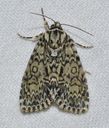
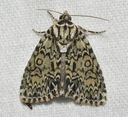
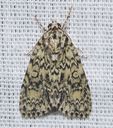
Acronicta heitzmani is a of dagger in the Noctuidae, first described by Charles V. Covell and Eric H. Metzler in 1992. The species is to the central United States, with documented occurrence in Missouri, Arkansas, Illinois, and Ohio. It is a relatively small noctuid moth with forewing lengths of 12–14.5 mm in males and 12.5–15 mm in females. Like other members of the Acronicta, it is a species attracted to artificial light sources.
Pronunciation
How to pronounce Acronicta heitzmani: //ˌækrəˈnɪktə ˈhaɪtsˌmɑːni//
These audio files are automatically generated. While they are not always 100% accurate, they are a good starting point.
Identification
Acronicta heitzmani can be distinguished from other dagger moths by its small forewing size (12–15 mm) and its restricted geographic range in the central United States (Missouri, Arkansas, Illinois, Ohio). It is most similar to other small Acronicta , but positive identification requires examination of genitalia or molecular analysis. The species was described in 1992 and is less frequently encountered than more widespread .
Images
Distribution
to the central United States. Documented from Missouri, Arkansas, Illinois, and Ohio.
Behavior
; attracted to artificial light sources.
Similar Taxa
- Acronicta betulae (Birch Dagger Moth)Similar size and general appearance; distinguished by association with birch and broader eastern U.S. distribution.
- Acronicta americana (American Dagger Moth)Much larger with forewings typically 25–30 mm; widespread across eastern North America with distinctive yellow-striped caterpillar.
- Other Acronicta speciesMany overlap in range; A. heitzmani is among the smallest and has the most restricted known distribution of described in the .
More Details
Taxonomic History
Described as a new by Charles V. Covell and Eric H. Metzler in 1992, based on specimens from the central United States. The specific epithet honors Heitzman, presumably a collector or contributor to lepidopteran studies.
Data Deficiency
The remains poorly known beyond its original description and basic distributional records. plants, larval , pupal characteristics, and detailed morphology have not been published.