
Arugisa latiorella
Walker, 1863
Watson's Arugisa Moth
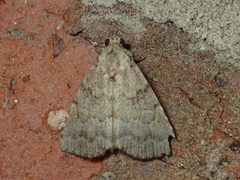
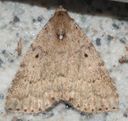
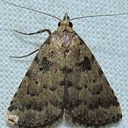
Arugisa latiorella, known as Watson's Arugisa , is a small erebid moth native to North America. First described by Francis Walker in 1863, it has been recorded across the southeastern and central United States. are active nearly year-round, and the larvae feed on Kentucky bluegrass.
Pronunciation
How to pronounce Arugisa latiorella: /əˈruːɡɪsə læˌtiːoʊˈrɛlə/
These audio files are automatically generated. While they are not always 100% accurate, they are a good starting point.
Identification
The small size (18–22 mm wingspan) and year-round activity in its range may help distinguish it from similar erebid . Specific diagnostic features are not documented in available sources.
Images
Appearance
Small with wingspan of 18–22 mm.
Habitat
Associated with grassland environments where its larval plant, Poa pratensis (Kentucky bluegrass), occurs. Specific preferences beyond host plant presence are not documented.
Distribution
North America: recorded from Florida to Texas, north to Kansas and Maryland.
Seasonality
active from January to November, indicating nearly year-round activity in its range.
Diet
Larvae feed on living and dead Poa pratensis (Kentucky bluegrass). diet is not documented.
Host Associations
- Poa pratensis - larval plantlarvae feed on both living and dead plant material
Life Cycle
Complete with larval and stages documented. Specific details on , pupal stages, or number of per year are not available.
Ecological Role
Larvae act as herbivores and on Kentucky bluegrass, potentially contributing to nutrient cycling in grassland .
Human Relevance
No documented economic or agricultural significance. Kentucky bluegrass is widely used in lawns and pastures, but this is not reported as a pest .
Similar Taxa
- Other Arugisa speciescongeneric in the same may share similar size and appearance; specific distinguishing features require examination