
Oxycilla malaca
Grote, 1875
Bent-lined Tan
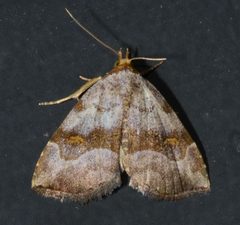
Oxycilla malaca, commonly known as the bent-lined tan, is a small in the Erebidae. It was described by Augustus Radcliffe Grote in 1875. The species is distributed across the southeastern and central United States, with records from ten states ranging from Texas to Pennsylvania. have a wingspan of approximately 20 mm. The species is assigned Hodges number 8407 in the North American moth classification system.
Pronunciation
How to pronounce Oxycilla malaca: //ˈɒksɪsɪlə məˈlækə//
These audio files are automatically generated. While they are not always 100% accurate, they are a good starting point.
Identification
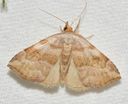
The can be identified by its small size (20 mm wingspan), tan coloration, and the distinctive bent or angled line on the forewings that gives the species its . It is distinguished from similar small erebid by this wing pattern and its specific geographic distribution in the southeastern United States. The Hodges number 8407 provides a standardized reference for identification in North American lepidopteran literature.
Images
Appearance
Small with wingspan approximately 20 mm. The 'bent-lined tan' refers to characteristic wing patterning with a bent or angled transverse line on tan-colored forewings. Specific details of coloration, wing shape, and body structure are not well documented in available sources.
Habitat
Specific preferences are not documented. Based on its distribution across diverse regions from Texas to Pennsylvania, the likely occupies a range of temperate habitats including deciduous forests, mixed woodlands, and possibly suburban or agricultural areas.
Distribution
North America: recorded from Georgia, Indiana, Kentucky, Mississippi, North Carolina, Ohio, Pennsylvania, South Carolina, Tennessee, and Texas. The distribution centers on the southeastern and south-central United States, with northern extensions into Pennsylvania and Ohio.
Similar Taxa
- Other Oxycilla speciesCongeneric in the Oxycilla share similar size and general ; accurate identification requires examination of genitalia or wing pattern details
- Small Calpinae moths in ErebidaeNumerous small, tan-colored erebid with subtle wing patterns occur in the same region and require careful comparison of wing markings and size