
Erastria
Hübner, [1813]
Species Guides
4- Erastria coloraria(Broad-lined Erastria Moth)
- Erastria cruentaria(Thin-Lined Erastria)
- Erastria decrepitaria
- Erastria viridirufaria
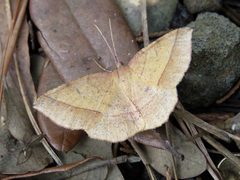
Erastria is a of geometrid moths erected by Jacob Hübner in 1813. The genus contains approximately 30 described distributed primarily in tropical and subtropical regions of Africa and Asia. are characterized by distinctive morphological features including upturned palpi, minutely ciliated in males, and abdominal tufts. Larvae possess four pairs of abdominal , consistent with the Geometridae.
Pronunciation
How to pronounce Erastria: /ɛˈræstriə/
These audio files are automatically generated. While they are not always 100% accurate, they are a good starting point.
Identification
Distinguished from related geometrid by the combination of: upturned palpi reaching above the vertex with prominent third joint; long and narrow forewing areole; hindwing venation with 3 and 4 from ; strong abdominal tufts shorter than hindwings; and naked legs. The male with minute ciliation provides additional diagnostic characters.
Images
Habitat
Tropical and subtropical environments. Specific microhabitat preferences are not documented at the level.
Distribution
Primarily Africa and Asia. Records include subtropical Africa (South Africa, Senegal, Ethiopia), India, and Madagascar.
Life Cycle
Larval stage with four pairs of abdominal . Further details on , pupal stages, or number of per year are not documented.
Similar Taxa
- Other Geometridae generaErastria shares the four pairs of larval and general body plan with other geometrid moths, but differs in the specific combination of palpal structure, forewing areole shape, and hindwing venation pattern.
More Details
Taxonomic history
The was erected by Jacob Hübner in 1813. have been described by numerous authors including Hübner, Walker, Warren, and Swinhoe across the 19th and early 20th centuries.
Species diversity
Approximately 30 have been described, with significant diversity in subtropical Africa and the Indian subcontinent.