
Pangrapta decoralis
Hübner, 1818
Decorated Owlet
Pronunciation
How to pronounce Pangrapta decoralis: //pænˈɡræptə ˌdɛkəˈreɪlɪs//
These audio files are automatically generated. While they are not always 100% accurate, they are a good starting point.
Identification
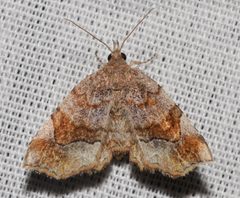
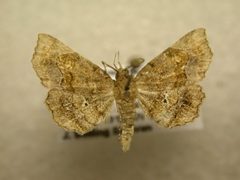
The decorated owlet can be distinguished from similar small erebid by its specific wing pattern: forewings show a combination of wavy transverse lines and a small discal spot, with a relatively uniform brown ground color lacking strong contrasting patches. The pale hindwings separate it from underwing moths (Catocala), which have boldly patterned hindwings. Genitalia examination may be required for definitive separation from congeneric .
Images
Appearance
Small with wingspan of 20–28 mm. Forewings are brown with darker markings and a pattern of lines and spots that provide camouflage against bark and leaf litter. Hindwings are paler, often with a subtle banding pattern. The overall coloration is cryptic, typical of many underwing and owlet moths in the Erebidae.
Habitat
Found in wooded and shrubby where Vaccinium plants occur, including forests, bogs, and heathlands. are frequently attracted to light.
Distribution
North America: from Alberta, Saskatchewan, and Manitoba in Canada eastward to Nova Scotia, and southward through the eastern United States to Florida and Texas.
Seasonality
are on wing from May to September. Two to three per year occur throughout most of the range, with peak activity varying by latitude.
Diet
Larvae feed on Vaccinium , including blueberries and cranberries. feeding habits are not documented.
Host Associations
- Vaccinium - larval food plantIncludes blueberry and cranberry
Life Cycle
Multivoltine with two to three per year. stage not explicitly documented in available sources.
Behavior
are and attracted to light. Larval is not well documented.
Ecological Role
Larvae function as herbivores on Vaccinium shrubs in forest and bog . may serve as prey for including bats and birds.
Human Relevance
Larvae feed on economically important Vaccinium crops, including blueberries and cranberries, though the is not considered a major agricultural pest. The is frequently encountered by citizen scientists and contributes to biodiversity records.
Similar Taxa
- Catocala species (underwing moths)Similar size and general appearance, but distinguished by boldly patterned hindwings in Catocala versus pale, relatively unmarked hindwings in Pangrapta decoralis
- Other Pangrapta speciesCongeneric may require genitalia examination for definitive identification; wing pattern details differ
More Details
Taxonomic history
First described by Jacob Hübner in 1818. The has remained stable in Pangrapta following reclassification of many former noctuid into Erebidae.
Citizen science records
Well represented in citizen science databases with over 5,000 observations on iNaturalist, reflecting its common occurrence and attraction to light.