
Hypena manalis
Walker, 1859
Flowing-line Hypena, Flowing-lined Snout
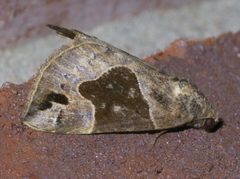
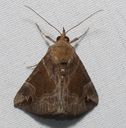
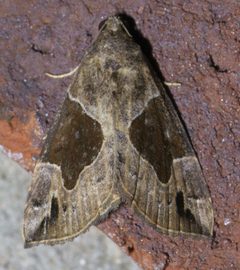
Hypena manalis is a small in the Erebidae, commonly known as the flowing-line hypena or flowing-lined snout. It occurs across eastern and central North America from Minnesota and Nova Scotia south to Florida and Texas. The is multivoltine, with active from spring through late summer. Larvae feed primarily on false nettle (Boehmeria cylindrica), though they have been successfully reared on dandelion and dock in captivity.
Pronunciation
How to pronounce Hypena manalis: /haɪˈpiːnə məˈneɪlɪs/
These audio files are automatically generated. While they are not always 100% accurate, they are a good starting point.
Images
Distribution
Eastern and central North America: Minnesota to Nova Scotia, south to Florida and Texas.
Seasonality
fly May to September in the southern part of the range, June to August in the north. Two to three per year.
Diet
Larvae feed on false nettle (Boehmeria cylindrica). Captive rearing has succeeded on dandelion and dock. feeding habits not documented.
Host Associations
- Boehmeria cylindrica - primary larval false nettle
- Taraxacum officinale - captive rearing dandelion
- Rumex - captive rearing dock
Life Cycle
Two to three per year. stage not explicitly documented in sources.
Similar Taxa
- Hypena scabraBoth in Hypena with similar size and general appearance; H. scabra (green cloverworm ) is more abundant in agricultural settings and has different larval plants including clover, alfalfa, and soybeans
- Other Hypena speciesMany Hypena share the characteristic snout-like projection and similar wing shape; accurate identification requires examination of wing pattern details including the distinctive flowing line pattern of H. manalis
More Details
Wingspan
23–28 mm
Sources and further reading
- BugGuide
- Wikipedia
- GBIF taxonomy match
- iNaturalist taxon
- NCBI Taxonomy
- Catalogue of Life
- Soybean Insects: Mid-to-Late Season Pests (V8 to Maturity) - AgriLife Extension Entomology
- green cloverworm (Hypena scabra) - Entomology Today
- A Revision of Soybean Caterpillar Pest Information for U.S. Soybean
- Bug Eric: National Moth Week 2024 Recap from Kansas City
- Bug Eric: Blacklighting Already?
- caterpillar pests of soybean - Entomology Today