
Zanclognatha marcidilinea
Grote, 1872
Yellowish Fan-foot, yellowish zanclognatha
A small litter moth in the Erebidae, known by the Yellowish Fan-foot. have a wingspan of approximately 28 mm and are active from spring through mid-summer. The is widely distributed across eastern North America. Larvae are thought to feed on decaying leaf litter.
Pronunciation
How to pronounce Zanclognatha marcidilinea: /zæŋkloʊˈɡnæθə ˌmɑːrsɪdɪˈlɪniə/
These audio files are automatically generated. While they are not always 100% accurate, they are a good starting point.
Identification
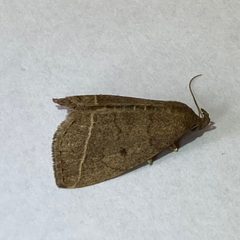
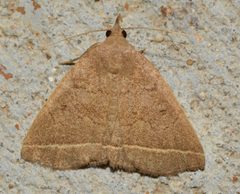
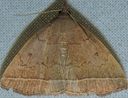
Distinguished from other Zanclognatha by its paler, more yellowish ground color. The longitudinal forewing lines are relatively straight and distinct. Compare to Zanclognatha laevigata (darker, more gray-brown) and Zanclognatha protumnusalis (more reddish-brown with different line pattern).
Images
Appearance
Small with wingspan approximately 28 mm. Forewings pale yellowish-brown with darker longitudinal lines. Hindwings lighter, often whitish. Body slender, matching wing coloration. simple, not feathery.
Habitat
Deciduous forests and woodlands. Associated with leaf litter and humid ground-level environments.
Distribution
Eastern North America: Nova Scotia west to Missouri, south to Florida and Arkansas.
Seasonality
active April through July. Single brooded or with overlapping in southern part of range.
Diet
Larvae probably feed on dead leaves, including cottonwood leaves.
Host Associations
- cottonwood - larval foodbased on probable feeding habits on dead leaves
Behavior
. attracted to light. Larvae inhabit leaf litter.
Ecological Role
Decomposer; larvae contribute to breakdown of leaf litter in forest .
Human Relevance
Occasionally encountered by naturalists and enthusiasts at light traps. No economic significance.
Similar Taxa
- Zanclognatha laevigataDarker gray-brown coloration, lacks yellowish tone of Z. marcidilinea
- Zanclognatha protumnusalisMore reddish-brown with different forewing line pattern
More Details
Taxonomic note
Walker described this in 1859, but Grote's 1872 description is the accepted authorship in current databases.
Common name usage
Yellowish Fan-foot is the preferred on iNaturalist; yellowish zanclognatha appears in older literature.