
Tetanolita mynesalis
Walker, 1859
Smoky Tetanolita, Smoky Tetanolita Moth
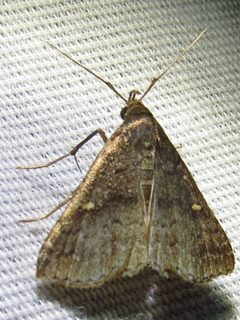
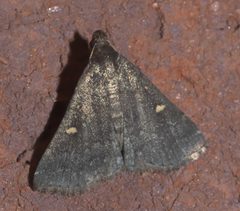
Tetanolita mynesalis, known as the smoky tetanolita, is a small litter moth in the Erebidae. First described by Francis Walker in 1859, it occurs in eastern North America with active from late spring through late autumn. The is notable as a prey item of bolas spiders, which chemically mimic its female to attract males.
Pronunciation
How to pronounce Tetanolita mynesalis: //ˌtɛtənəˈlaɪtə maɪˈnɛsəlɪs//
These audio files are automatically generated. While they are not always 100% accurate, they are a good starting point.
Identification
Small size (wingspan 20–25 mm) and smoky gray-brown coloration distinguish it from some . Accurate identification to level may require examination of genitalia or reference to regional keys. Distinguished from other eastern North American Tetanolita species by specific wing pattern and coloration details; consultation of technical literature recommended for definitive identification.
Images
Appearance
Small with wingspan of 20–25 mm. Coloration is smoky gray-brown, consistent with its . Typical of litter moths in Herminiinae.
Habitat
Forest and woodland where leaf litter accumulates. Associated with environments supporting decomposing plant material.
Distribution
Eastern North America. The nominate occurs in continental eastern North America; subspecies T. m. inaequalis is restricted to Bermuda.
Seasonality
active from May to November, with extended period spanning late spring through late autumn.
Diet
Larvae probably feed on dead leaves. do not feed.
Behavior
. are active during night hours, with peak activity patterns that may shift seasonally. Males are attracted to female , making them susceptible to chemical mimicry by predatory bolas spiders.
Ecological Role
Larval stage contributes to leaf litter decomposition. serve as prey for including bolas spiders (Mastophora ), which exploit the moth's chemical communication system.
Human Relevance
Subject of chemical research due to its role in demonstrating -prey chemical mimicry. The ' has been identified and studied in the context of bolas spider predatory strategies. No significant economic or agricultural impact.
Similar Taxa
- Tetanolita floridanaOverlapping range in eastern North America; distinguished by wing pattern details and typically more restricted preferences.
- Other Herminiinae litter mothsSimilar size and general appearance; require examination of wing venation, genitalia, or molecular markers for separation.
More Details
Chemical Ecology Significance
Tetanolita mynesalis has been documented as a key prey of the American bolas spider (Mastophora species). The spider produces a chemical mimic of the female T. mynesalis to attract male , demonstrating sophisticated -prey chemical communication. Research by Walter Leal and colleagues has characterized this interaction as a model system for studying insect olfaction and chemical mimicry.
Subspecies
Two recognized: T. m. mynesalis (continental eastern North America) and T. m. inaequalis Ferguson, Hilburn & Wright, 1991 ( to Bermuda).