
Renia flavipunctalis
Geyer, 1832
Yellow-spotted Renia Moth, Yellow-dotted Renia, Even-lined Renia
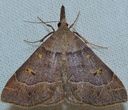
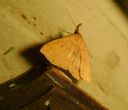
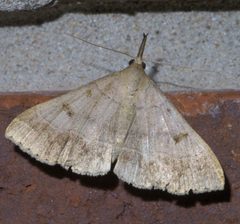
Renia flavipunctalis is a litter moth in the Erebidae, first described by Carl Geyer in 1832. It is a medium-sized with a wingspan of 26–31 mm, recognized by its yellow spotting pattern. The occurs across eastern and central North America, from southern Canada to the southern United States. are active during summer months, with northern having a single per year. Larvae feed on decaying organic matter, particularly dead leaves of deciduous trees.
Pronunciation
How to pronounce Renia flavipunctalis: //ˈɹiːniə ˌflaɪvɪˌpʌŋkˈteɪlɪs//
These audio files are automatically generated. While they are not always 100% accurate, they are a good starting point.
Identification
Distinguished from similar Renia by the combination of yellow spots (not lines or bands) on the forewings and relatively even, straight transverse lines. R. discoloralis has more irregular wing patterns; R. adspergillus has different spotting arrangement. Genitalia examination may be required for definitive identification of some specimens.
Images
Appearance
Medium-sized with wingspan 26–31 mm. Forewings display yellow spotting or dots against a darker background, with relatively even transverse lines. Hindwings are typically paler. Overall coloration is cryptic, blending with leaf litter.
Habitat
Deciduous forest floors and woodland edges where leaf litter accumulates. Occupies areas with abundant fallen leaves of deciduous trees.
Distribution
Eastern and central North America. Southern Canada from Nova Scotia west to Alberta; throughout the eastern United States south to Florida and west to Texas. Records from Alberta, Manitoba, Saskatchewan, and Vermont confirm presence in northern portions of range.
Seasonality
active June to August. Single per year in northeastern North America; southern may have extended or multiple periods.
Diet
Larvae feed on organic matter, specifically dead leaves of deciduous trees. do not feed.
Life Cycle
One annually in northern range; likely partial second generation or extended in southern range. Larval stage occurs in leaf litter. site not documented in available sources.
Behavior
are . Larvae are , consuming decaying leaf material rather than living plant tissue.
Ecological Role
Larvae function as decomposers, contributing to nutrient cycling in deciduous forest through consumption and processing of dead leaf material.
Human Relevance
No significant economic or agricultural impact. Occasionally encountered by naturalists and enthusiasts. Not a pest .
Similar Taxa
- Renia discoloralisSimilar size and ; differs in having more irregular, less even wing lines and different spotting pattern
- Renia adspergillusOverlapping range; distinguished by different arrangement of forewing spots and markings
More Details
Larval Feeding Biology
Unlike many Lepidoptera larvae that feed on living plant tissue, R. flavipunctalis larvae are specialized on decaying leaf matter. This feeding strategy places them in the 'litter moth' ecological guild within the Herminiinae.