
Allotria elonympha
Hübner, 1818
False Underwing
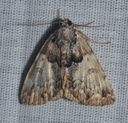
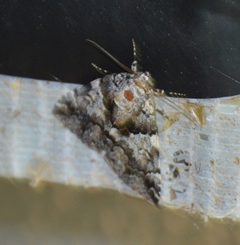
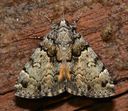
A medium-sized in the Erebidae, known for its cryptic forewings and brightly patterned hindwings. The is found in eastern North America and is most active during late summer and early autumn. rest with forewings covering the hindwings, concealing the colorful underwing pattern until disturbed.
Pronunciation
How to pronounce Allotria elonympha: /əˈloʊtriə ɛlɒˈnɪmfə/
These audio files are automatically generated. While they are not always 100% accurate, they are a good starting point.
Identification
Distinguished from true underwing moths (Catocala) by the forewing pattern: Allotria elonympha lacks the clean, contrasting and spots typical of Catocala, instead showing more diffuse, wavy transverse lines. The hindwing pattern of two black bands on orange-yellow ground color separates it from most other eastern North American Erebidae. The broken or notched outer hindwing band is a useful diagnostic feature.
Images
Habitat
Deciduous and mixed forests, particularly areas with mature trees; also found in wooded suburban areas and parks. are attracted to lights in forested .
Distribution
Eastern North America, ranging from southern Canada through the northeastern and midwestern United States, south to at least North Carolina and west to the Great Plains region.
Seasonality
active primarily from July through September, with peak activity in August. Single-brooded in most of range.
Host Associations
- Fagus grandifolia - larval American beech
- Quercus spp. - larval oaks
Life Cycle
Larvae feed on leaves of beech and oak. Overwinters as pupae in leaf litter or soil.
Behavior
are and strongly attracted to light. When at rest on tree trunks, the cryptic forewings provide camouflage; when disturbed, the sudden flash of bright hindwing colors may startle . This display is characteristic of underwing moths generally.
Ecological Role
Larvae function as herbivores in forest , consuming foliage of tree . serve as prey for including bats and birds.
Human Relevance
Occasionally encountered at porch lights and in surveys. Of minor interest to lepidopterists; not a pest .
Similar Taxa
- Catocala spp.True underwing moths share the cryptic forewing/bright hindwing pattern but differ in forewing markings (cleaner spots and lines) and typically have more extensive hindwing coloration
- Allotria sandranensisA related with similar overall appearance but restricted to Florida and with subtle differences in forewing pattern