
Melipotis acontioides
Guenée, 1852
Royal Poinciana Moth
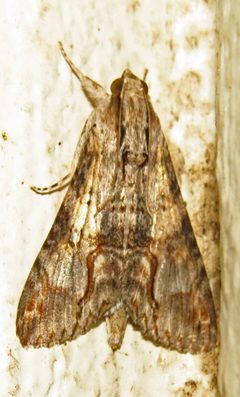
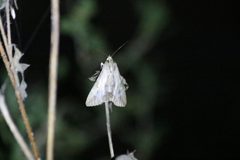
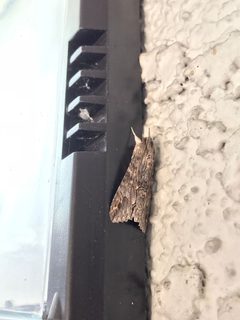
Melipotis acontioides, commonly known as the Royal Poinciana , is a moth in the Erebidae. The was first described by Achille Guenée in 1852. It has a broad distribution spanning the southern United States, Mexico, Central and South America, and the Caribbean, with a distinct to the Galápagos Islands. The larvae are specialized feeders on certain leguminous trees.
Pronunciation
How to pronounce Melipotis acontioides: /ˌmɛlɪˈpoʊtɪs əˌkɒntiˈɔɪdiːz/
These audio files are automatically generated. While they are not always 100% accurate, they are a good starting point.
Identification
The can be distinguished from similar Melipotis species by geographic range and association with plants. The Galápagos M. a. producta was described by Hayes in 1975 based on insular . Accurate identification to species level typically requires examination of genitalic characters or molecular analysis.
Images
Appearance
have a wingspan of approximately 43 mm. As a member of the Melipotis, it exhibits the typical forewing patterning of the group, though specific coloration details are not well documented in available sources.
Habitat
Found in diverse environments across its broad range, including arid and semi-arid regions of the southwestern United States, tropical and subtropical forests in Central and South America, and insular in the Caribbean and Galápagos. Associated with areas where plants of the Delonix and Parkinsonia occur.
Distribution
Native range extends from the southern United States (California, Arizona, New Mexico, Texas, Florida) through Mexico and Central America to Brazil, Argentina, and the Galápagos Islands. Also present throughout the Caribbean including Cuba, the British Virgin Islands, Jamaica, and Puerto Rico.
Diet
Larvae feed nocturnally on Delonix regia (Royal Poinciana) and of Parkinsonia including P. and P. florida. feeding habits are not documented.
Host Associations
- Delonix regia - larval food plantPrimary , gives its
- Parkinsonia aculeata - larval food plant
- Parkinsonia florida - larval food plant
Life Cycle
Complete with , larva, pupa, and stages. Larvae are feeders. Specific details of sites, number of per year, and stage are not documented.
Behavior
Larvae feed exclusively at night. are presumably , as is typical for the Erebidae.
Ecological Role
As a herbivore on leguminous trees, the larvae contribute to nutrient cycling and serve as a food source for and . The may play a role in pollination as visit flowers, though this has not been studied.
Human Relevance
The references the ornamental tree Delonix regia, widely planted in tropical and subtropical regions. The is not considered an economic pest. Its presence indicates the occurrence of its plants in native and ornamental settings.
Similar Taxa
- Melipotis indistinctaOverlapping range in southwestern North America; distinguished by subtle differences in forewing pattern and genitalia
- Melipotis jucundaSympatric in parts of range; requires dissection or molecular analysis for reliable separation
- Other Melipotis species contains numerous similar-appearing ; accurate identification often requires expert examination