
Melipotis jucunda
Hübner, 1818
Merry Melipotis Moth, Merry Graphic Moth
Melipotis jucunda is a in the Erebidae with a wingspan of 35–42 mm. It occurs across much of North America, from western Canada through the United States to Mexico, with additional records in Colombia and northeast Brazil. The produces two to three annually in New Jersey and multiple generations farther south.

Pronunciation
How to pronounce Melipotis jucunda: /ˌmɛlɪˈpoʊtɪs dʒuˈkʌndə/
These audio files are automatically generated. While they are not always 100% accurate, they are a good starting point.
Identification
Melipotis jucunda can be distinguished from related Melipotis by the combination of its moderate size (wingspan 35–42 mm) and distribution. Within its range, it overlaps with other Melipotis species, and precise identification may require examination of genitalia or reference to regional keys. The two recognized —M. j. jucunda and M. j. hadeniformis (restricted to California)—differ in subtle wing pattern elements.
Images
Appearance
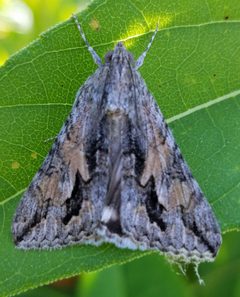
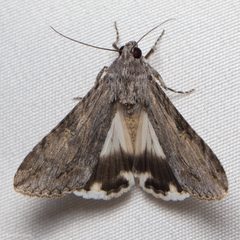
Wingspan measures 35–42 mm. The exhibits the typical forewing patterning of the Melipotis, with dark transverse lines and a spot on a grayish-brown ground color. Hindwings are pale with a dark marginal band. in is expected given characteristics, with males bearing more strongly bipectinate antennae.
Habitat
Occurs in diverse open across its broad range, from temperate regions in Canada and the northern United States to subtropical and tropical areas in Mexico, the Caribbean, and South America. Specific habitat associations are poorly documented, but the is presumably adapted to areas supporting its larval plants.
Distribution
Documented from western Canada (Alberta, Manitoba, Saskatchewan), most of the United States, Mexico (Yucatán, Mérida), Colombia, and northeast Brazil. The M. j. hadeniformis is restricted to California.
Seasonality
Two to three occur in New Jersey. Multiple generations are produced in the southern portion of the range, where favorable conditions permit year-round or extended activity.
Diet
Larvae feed on Salix bonplandiana and Salix wrightii (willows), Acacia , and Calliandra eriophylla. feeding habits are not documented.
Host Associations
- Salix bonplandiana - larval willow
- Salix wrightii - larval willow
- Acacia - larval -level association
- Calliandra eriophylla - larval fairy duster
Life Cycle
Complete with two to three annually in temperate regions and multiple generations in subtropical and tropical portions of the range. stage is not specified in available sources.
Ecological Role
Larval herbivore on woody legumes and willows. may contribute to pollination when visiting flowers, as has been observed in congeneric .
Human Relevance
No significant direct interactions with humans documented. The is occasionally encountered by lepidopterists and naturalists.
Similar Taxa
- Other Melipotis speciesSimilar forewing patterning and size range; precise identification often requires dissection or reference to specialized keys
- Melipotis jucunda hadeniformisCalifornia distinguished by subtle differences in wing pattern; treated as
More Details
Subspecies
Two recognized: Melipotis jucunda jucunda (widespread) and Melipotis jucunda hadeniformis Behr, 1870 (California). The nominate form exhibits the standard wing pattern, while hadeniformis shows minor pattern modifications.
Taxonomic history
Described by Hübner in 1818. The hadeniformis was described by Behr in 1870 based on Californian material.