
Drasteria divergens
Behr, 1870
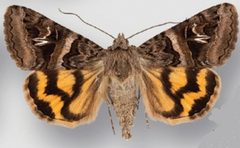
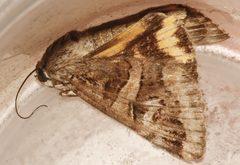
Drasteria divergens is a in the Erebidae, first described by Behr in 1870. The has a wingspan of approximately 44 mm. are active from March through August in California, with a broader distribution spanning from California to Colorado and northward to British Columbia. This species belongs to a known for underwing moths that typically display cryptic forewings and brightly colored hindwings used in startle defense.
Pronunciation
How to pronounce Drasteria divergens: /ˈdrastɛriə dɪˈvɜrdʒɛnz/
These audio files are automatically generated. While they are not always 100% accurate, they are a good starting point.
Identification
Distinguished from similar Drasteria by specific wing pattern elements, though precise diagnostic characters require examination of specimens. The Drasteria can be separated from related underwing genera by genitalic features and wing venation patterns. Within the genus, species identification relies on details of forewing maculation and hindwing color pattern. Drasteria mirifica, a sympatric species in some areas, has been noted to share the startle defense of flashing brightly colored hindwings.
Images
Appearance
have a wingspan of approximately 44 mm. As a member of the Drasteria, it possesses cryptic, dull-colored forewings that provide camouflage against bark or substrate when at rest. The hindwings are typically brightly patterned, often with contrasting bands or patches of color that are concealed at rest but flashed when disturbed.
Habitat
Occurs in diverse across its western North American range, from coastal California through montane regions of Colorado to the Pacific Northwest. Specific habitat associations are poorly documented but likely include open woodlands, shrublands, and riparian areas where plants for larvae occur.
Distribution
Western North America, from California east to Colorado and north to British Columbia.
Seasonality
are on wing from March to August in California, with peak activity likely varying by latitude and elevation.
Behavior
are and attracted to light. Like other members of the Drasteria, adults likely employ a startle defense tactic, flashing brightly colored hindwings when disturbed to momentarily startle potential before taking .
Ecological Role
function as where they visit flowers. Larvae, though unstudied in this , likely serve as herbivores on plants and as prey for and other natural enemies.
Human Relevance
Occasionally encountered by enthusiasts at light traps. Not known to be of economic importance.
Similar Taxa
- Drasteria mirificaSympatric in parts of the range and shares similar startle defense with brightly colored hindwings; distinguished by specific wing pattern details
- Catocala speciesRelated underwing moths in the same with similar cryptic forewing and bright hindwing pattern; distinguished by -level characters of genitalia and wing venation
More Details
Taxonomic history
Originally described as Syneda divergens by Behr in 1870, later transferred to the Drasteria.
Data gaps
Larval plants, complete across the range, and detailed associations remain undocumented for this .