
Bulia deducta
Morrison, 1875
Deduced Graphic
Bulia deducta is a in the Erebidae, Calpinae, first described by Herbert Knowles Morrison in 1875. It is distributed across western and central North America from central Mexico northward to the Great Plains and western United States. The is notable for its association with Prosopis (mesquite) as a larval plant and its extended season in arid regions.
Pronunciation
How to pronounce Bulia deducta: /ˈbjuːliə dɪˈdʌktə/
These audio files are automatically generated. While they are not always 100% accurate, they are a good starting point.
Identification
The can be distinguished from by geographic distribution and, where applicable, genitalia examination. It overlaps with related Bulia species in parts of its range; precise identification may require reference to original description or resources. The extended season (March–October) in southwestern may aid in distinguishing it from some seasonal congeners.
Images
Appearance
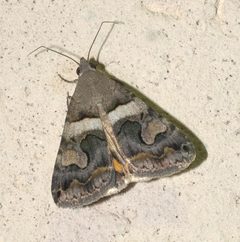
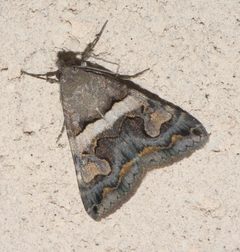
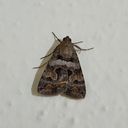
Wingspan 34–38 mm. exhibit cryptic coloration typical of the , with forewings patterned in muted earth tones. Specific wing pattern details are not well documented in available sources.
Habitat
Arid and semi-arid regions of western North America, including desert scrub, grassland, and open woodland where plants occur. Associated with Prosopis-dominated vegetation .
Distribution
Native range extends from central Mexico north to central California, east through Utah, Wyoming, and Nebraska, and south to Arkansas and Alabama. Records also include the Canadian provinces of Alberta, Manitoba, and Saskatchewan.
Seasonality
are on wing from March to October in the southwestern United States, representing an extended season. Specific in other parts of the range is less well documented.
Diet
Larvae feed on Prosopis (mesquite). feeding habits are not documented.
Host Associations
- Prosopis - larval food plant of mesquite trees and shrubs
Life Cycle
Complete with , larval, pupal, and stages. Specific details of development duration, stage, and number of per year are not documented.
Behavior
activity pattern typical of Erebidae. Specific behavioral observations beyond period are not documented.
Ecological Role
Larval herbivore on Prosopis, contributing to nutrient cycling and serving as potential prey for and . Specific ecological impacts are not quantified.
Human Relevance
No documented economic or medical significance. The related Bulia schausi has been intercepted at U.S. ports as a potential agricultural pest, but B. deducta itself is native to the United States and not considered .
Similar Taxa
- Bulia schausi with similar ; distinguished by geographic distribution (B. schausi is native to northwestern Mexico and has been intercepted as an at U.S. ports, while B. deducta is native throughout its U.S. range)
More Details
Taxonomic history
Originally described as Syneda deducta by Morrison in 1875, later transferred to the Bulia.
Research significance
The Bulia schausi has been subject to increased scrutiny due to its interception as a first-in-the-nation pest at U.S. ports of entry in 2014, highlighting the potential agricultural significance of the .