
Catocala sappho
Strecker, 1874
Sappho Underwing
Catocala sappho is a in the Erebidae, first described by Strecker in 1874. It is a medium-sized underwing moth with a wingspan of 62–75 mm. are active from May to July and again from September to October in highland areas. The is found in the southeastern and central United States, ranging from Virginia and Tennessee south to Florida and west to Louisiana, Mississippi, Texas, Missouri, and Illinois. Larvae feed on Carya species (hickories and pecans).


Pronunciation
How to pronounce Catocala sappho: /kætoʊˈkɑːlə ˈsæfoʊ/
These audio files are automatically generated. While they are not always 100% accurate, they are a good starting point.
Identification
Distinguished from other Catocala by specific forewing pattern elements and hindwing coloration. Underwing moths in this are identified by their characteristic resting posture with forewings held together over the back, concealing the brightly patterned hindwings. Accurate identification to species level typically requires examination of forewing markings and, in some cases, genitalia dissection. Similar species include other Catocala underwings, which differ in specific wing pattern details.
Images
Appearance
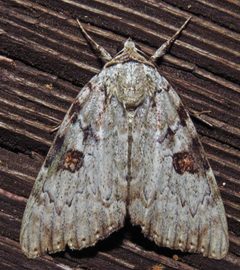
Medium-sized underwing with wingspan 62–75 mm. Forewings are cryptically colored in dull gray-brown tones that provide camouflage against tree bark when at rest. Hindwings are brightly colored with bold patterns—typically featuring orange, red, black, white, or blue markings that are concealed at rest but revealed when the wings are spread. The body is robust and furry.
Habitat
Associated with deciduous forests containing hickory trees. Found in woodland , forest edges, and areas with mature Carya . Highland show activity patterns.
Distribution
Southeastern and central United States: Virginia and Tennessee south to Florida, west to Louisiana, Mississippi, Texas, Missouri, and Illinois.
Seasonality
active May–July and September–October in highland areas. pattern with spring and late summer/fall .
Diet
Larvae feed on Carya (hickories and pecans). diet not documented.
Host Associations
- Carya - larval food planthickories and pecans
Life Cycle
Complete with , larva, pupa, and stages. Larvae are specialized feeders on Carya foliage. occurs in soil or leaf litter. Adults emerge in spring and again in late summer to fall in highland areas.
Behavior
are and attracted to light. When disturbed, they flash their brightly colored hindwings as a startle defense against , then fly to escape. Typically rest on tree trunks with forewings covering hindwings, providing effective bark-matching camouflage. Underwing moths generally remain on the periphery of light stations rather than landing directly on illuminated sheets.
Ecological Role
Larvae function as herbivores on hickory trees. serve as prey for including bats, birds, and spiders. The bright hindwing coloration suggests aposematic or deimatic defensive function. Contributes to nutrient cycling through larval feeding and adult-adult and adult-predator interactions.
Human Relevance
Subject of interest for lepidopterists and enthusiasts. Participates in National Moth Week events as a representative of the popular underwing moth group. No documented economic significance as pest or beneficial .
Similar Taxa
- Other Catocala speciesShare the underwing with cryptic forewings and bright hindwings; distinguished by specific wing pattern details
More Details
Taxonomic history
Originally described by Ferdinand Heinrich Hermann Strecker in 1874. The name Catocala is derived from Greek meaning 'beautiful below', referring to the concealed colorful hindwings.
Conservation status
No formal conservation status assessment found; appears to be secure within its documented range based on available observation records.
Sources and further reading
- BugGuide
- Wikipedia
- GBIF taxonomy match
- iNaturalist taxon
- NCBI Taxonomy
- Catalogue of Life
- A Gathering of Lepidopterists: Who's Who of the Butterfly, Moth Experts | Bug Squad
- Got Moths? Celebrate National Moth Week and Global Citizen Science
- Bug Eric: National Moth Week Recap, 2015
- Bug Eric: National Moth Week Recap for Colorado Springs
- Bug Eric: National Moth Week 2024 Recap from Kansas City
- Bug Eric: New Mexico Night Bugs