
Catocala marmorata
Edwards, 1864
Marbled Underwing

Pronunciation
How to pronounce Catocala marmorata: /ˌkætəˈkɑːlə ˌmɑrmɔˈrɑːtə/
These audio files are automatically generated. While they are not always 100% accurate, they are a good starting point.
Identification
Distinguished from other Catocala by geographic range and association with Populus and Salix plants. Specific wing pattern differences from not detailed in available sources.
Images
Appearance
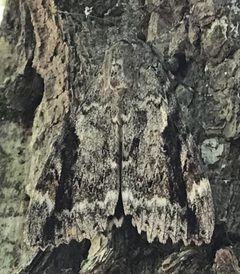
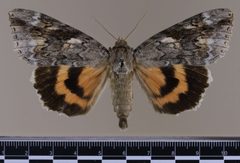
Wingspan 85–95 mm. Forewings are dull-colored and serve as camouflage when at rest. Hindwings display bold, colorful patterns typical of underwing moths in the Catocala.
Habitat
Associated with containing Populus and Salix . Exact habitat preferences not specified beyond plant requirements.
Distribution
United States: Vermont to South Carolina, west to Indiana and Illinois.
Seasonality
on wing July to September, varying by location. One per year.
Diet
Larvae feed on Populus and Salix .
Host Associations
- Populus - larval
- Salix - larval
Life Cycle
Probably one per year. Larval stage feeds on plants; in mid to late summer.
Behavior
attracted to light. Typical underwing resting posture with forewings held together over back, concealing colorful hindwings.
Ecological Role
Larval herbivore on Populus and Salix. role in not documented in sources.
Human Relevance
Subject of interest to lepidopterists and enthusiasts. may be attracted to fermenting mixtures used in moth collecting.
Similar Taxa
- Other Catocala speciesShare similar underwing and resting posture; distinguished by specific wing patterns, geographic range, and plant associations.
More Details
Taxonomic history
First described by William Henry Edwards in 1864.
Sources and further reading
- BugGuide
- Wikipedia
- GBIF taxonomy match
- iNaturalist taxon
- NCBI Taxonomy
- Catalogue of Life
- A Gathering of Lepidopterists: Who's Who of the Butterfly, Moth Experts | Bug Squad
- Beetle Collecting 101: Fermenting bait traps for collecting longhorned beetles | Beetles In The Bush
- Got Moths? Celebrate National Moth Week and Global Citizen Science
- Bug Eric: National Moth Week Recap, 2015
- Bug Eric: National Moth Week Recap for Colorado Springs
- Bug Eric: National Moth Week 2024 Recap from Kansas City