
Catocala irene
Behr, 1870
Irene's underwing
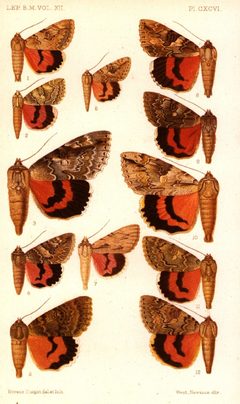
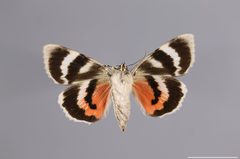
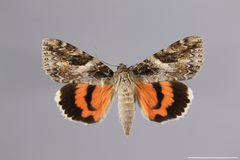
Catocala irene, known as Irene's underwing, is a in the Erebidae first described by Hans Hermann Behr in 1870. It is found in the western United States, specifically in Utah, California, and Nevada. The has a wingspan of 65–75 mm and are active from July to September, with likely one per year. The larvae feed on Populus and Salix species.
Pronunciation
How to pronounce Catocala irene: /ˈkætəkələ ɪˈriːniː/
These audio files are automatically generated. While they are not always 100% accurate, they are a good starting point.
Identification
As an underwing in the Catocala, this can be recognized by the typical resting posture with forewings held together over the back, concealing the brightly patterned hindwings. Specific diagnostic features distinguishing C. irene from other Catocala species are not documented in available sources. Identification to species level likely requires examination of wing pattern details, genitalia, or geographic context given its restricted western U.S. range.
Images
Habitat
Specific preferences for this are not documented. Based on larval plants, it likely occurs in riparian areas, woodlands, and other habitats supporting Populus (poplar/cottonwood) and Salix (willow) species.
Distribution
Western United States: documented from Utah, California, and Nevada. The Catocala irene valeria occurs in Arizona.
Seasonality
are on wing from July to September, with timing varying by location. There is probably one per year.
Diet
Larvae feed on Populus and Salix (poplars/cottonwoods and willows). feeding habits are not documented.
Host Associations
- Populus - larval larvae feed on poplar/cottonwood
- Salix - larval larvae feed on willow
Life Cycle
Probably (one per year). Specific details of , larval, pupal, and stages are not documented beyond adult period and larval associations.
Behavior
Typical underwing : rests with forewings folded over back, concealing hindwings; when disturbed, rapidly spreads wings to reveal brightly colored hindwings, likely as a startle defense. Specific behavioral observations for this are not documented.
Ecological Role
Larval stage functions as herbivore on woody plants (Populus, Salix). role in is not documented; may serve as or prey for . Specific ecological functions are not described in available sources.
Human Relevance
Not documented. As with many underwing moths, may be encountered by naturalists and enthusiasts. No known economic or agricultural significance.
Similar Taxa
- Catocala amestrisAnother underwing found in western North America; distinguished by specific wing patterns and geographic distribution
- Catocala delilahAnother underwing recorded from southern Colorado region; distinguished by wing patterns and range
More Details
Subspecies
Two are recognized: Catocala irene irene (nominate) and Catocala irene valeria H. Edwards, 1880, which occurs in Arizona.
Taxonomic history
First described by Hans Hermann Behr in 1870. The name Catocala is derived from Greek meaning 'beautiful below', referring to the striking hindwing patterns concealed beneath the cryptic forewings.
Sources and further reading
- BugGuide
- Wikipedia
- GBIF taxonomy match
- iNaturalist taxon
- NCBI Taxonomy
- Catalogue of Life
- A Gathering of Lepidopterists: Who's Who of the Butterfly, Moth Experts | Bug Squad
- Don't Miss This UC Davis Seminar by Ecology Researcher Andrew Corbett | Bug Squad
- Bohart Museum Open House: 'Bark Beetle Forest Central' | Bug Squad
- alien plant species | Blog
- Got Moths? Celebrate National Moth Week and Global Citizen Science
- Bug Eric: National Moth Week Recap, 2015