
Catocala illecta
Walker, 1858
Magdalen Underwing
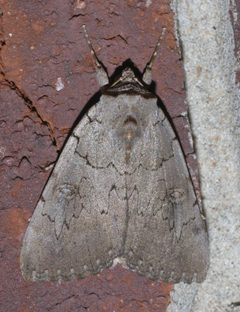
Catocala illecta, commonly known as the Magdalen Underwing, is a in the Erebidae. The was first described by Francis Walker in 1858. It is characterized by cryptic forewings that conceal brightly colored hindwings, a trait typical of underwing moths in the Catocala. The larvae feed on specific plants including leadplant, honey locust, and black locust. are active during late spring and early summer, with a single per year.

Pronunciation
How to pronounce Catocala illecta: //ˌkætəˈkeɪlə ɪˈlɛktə//
These audio files are automatically generated. While they are not always 100% accurate, they are a good starting point.
Identification
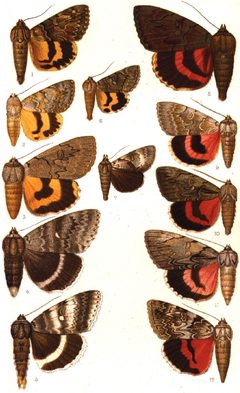
The Magdalen Underwing can be distinguished from other Catocala by its specific geographic distribution and, where observable, details of hindwing coloration and pattern. Accurate identification often requires examination of the concealed hindwings and may necessitate comparison with reference specimens or specialized literature. The species is most likely to be confused with other underwing moths in the same that share similar forewing cryptic patterns.
Images
Appearance
Wingspan measures 60–70 mm. Forewings are dull-colored and cryptic, serving as camouflage when the is at rest. Hindwings are concealed beneath the forewings and display bold, contrasting coloration—typical of underwing moths—though specific pattern details for this are not described in available sources.
Habitat
Inhabits deciduous and mixed forest environments, particularly areas where larval plants occur. Associated with woodland edges, open forests, and riparian corridors where leadplant, honey locust, or black locust grow.
Distribution
North America: south-western Ontario south to Tennessee and South Carolina; west and south to Texas; north through Oklahoma and Kansas to Nebraska, Wisconsin, Indiana, Illinois, and Michigan.
Seasonality
are on wing from May to July depending on location. One per year.
Diet
Larvae feed on Amorpha canescens (leadplant), Gleditsia triacanthos (honey locust), and Robinia pseudoacacia (black locust). feeding habits not documented.
Host Associations
- Amorpha canescens - larval leadplant
- Gleditsia triacanthos - larval honey locust
- Robinia pseudoacacia - larval black locust
Life Cycle
Complete with , larva, pupa, and stages. Larvae feed on specified plants before pupating. Adults emerge in late spring to early summer. Single per year; stage not specified in available sources.
Behavior
are . Like other underwing moths, they typically rest with forewings folded over the back, concealing the brightly colored hindwings. When disturbed, they may flash the hindwings as a startle defense. They are attracted to lights, though underwing moths often remain on the periphery of light stations rather than landing directly on illuminated sheets.
Ecological Role
Larvae function as herbivores on specific leguminous plants. may serve as when feeding, though this is not documented for this . Both life stages likely serve as prey for various including birds, bats, and insectivorous arthropods.
Human Relevance
Subject of interest among lepidopterists and enthusiasts, particularly during National Moth Week events. No significant economic or agricultural impact documented.
Similar Taxa
- Other Catocala speciesShare the characteristic underwing with cryptic forewings and colorful hindwings; require careful examination of hindwing patterns and geographic distribution for differentiation.
Sources and further reading
- BugGuide
- Wikipedia
- GBIF taxonomy match
- iNaturalist taxon
- NCBI Taxonomy
- Catalogue of Life
- A Gathering of Lepidopterists: Who's Who of the Butterfly, Moth Experts | Bug Squad
- Got Moths? Celebrate National Moth Week and Global Citizen Science
- Bug Eric: National Moth Week Recap, 2015
- Bug Eric: National Moth Week Recap for Colorado Springs
- Bug Eric: National Moth Week 2024 Recap from Kansas City
- Bug Eric: New Mexico Night Bugs