
Catocala faustina
Strecker, 1873
Faustina Underwing
Species Guides
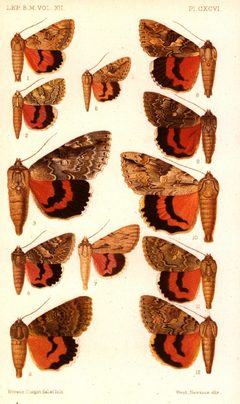
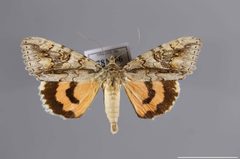
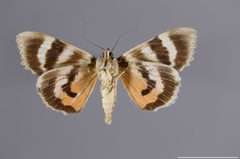
1Catocala faustina is a western North American underwing in the Erebidae. are medium-sized with a wingspan of approximately 58 mm. The exhibits the characteristic underwing : cryptic, bark-patterned forewings that conceal brightly colored hindwings when at rest. Adults are active in late summer and autumn, with records from September to October. The larvae feed exclusively on willow species (Salix).
Pronunciation
How to pronounce Catocala faustina: //ˌkætəˈkeɪlə fɔˈstiːnə//
These audio files are automatically generated. While they are not always 100% accurate, they are a good starting point.
Identification
Distinguished from other Catocala by geographic range, period, and association with willow plants. Forewing pattern and hindwing coloration differ from sympatric species. C. f. faustina ( nominate) occurs throughout the range; C. f. cleopatra and C. f. allusa are sometimes treated as distinct species. Identification to subspecies requires examination of genitalia or detailed wing pattern analysis.
Images
Habitat
Riparian corridors, wetlands, and moist woodland edges where willow (Salix) occur. Associated with montane and foothill elevations in western North America.
Distribution
Western North America: United States from Colorado west to California, north through Washington to British Columbia, Canada. Also recorded from Idaho, Montana, Nevada, Oregon, and Utah.
Seasonality
on wing September to October, varying by location and elevation. Single per year ().
Diet
Larvae feed on Salix (willows). feeding habits not documented.
Host Associations
- Salix - larval plantSpecific willow not documented; association is -level.
Life Cycle
Probably one per year. stage not confirmed from available sources. Larval development on willow ; likely occurs in soil or leaf litter.
Behavior
are . Attracted to lights, though underwing moths often remain on the periphery of light stations rather than landing directly on sheets. Adults may be flushed from daytime resting positions on tree trunks.
Ecological Role
Larval herbivore on willows; contributes to nutrient cycling in riparian . likely serve as prey for including bats and birds.
Similar Taxa
- Catocala epioneOverlaps in range; both are western underwing moths but differ in forewing pattern and hindwing coloration.
- Catocala amestrisOccurs in similar western ; distinguished by wing patterns and more northerly distribution.
- Catocala aholibahSympatric in some areas; larger size and different hindwing pattern.
Sources and further reading
- BugGuide
- Wikipedia
- GBIF taxonomy match
- iNaturalist taxon
- NCBI Taxonomy
- Catalogue of Life
- A Gathering of Lepidopterists: Who's Who of the Butterfly, Moth Experts | Bug Squad
- Got Moths? Celebrate National Moth Week and Global Citizen Science
- Bug Eric: National Moth Week Recap, 2015
- Bug Eric: National Moth Week Recap for Colorado Springs
- Bug Eric: National Moth Week 2024 Recap from Kansas City
- Bug Eric: New Mexico Night Bugs