Catocala coccinata
Grote, 1872
Scarlet Underwing
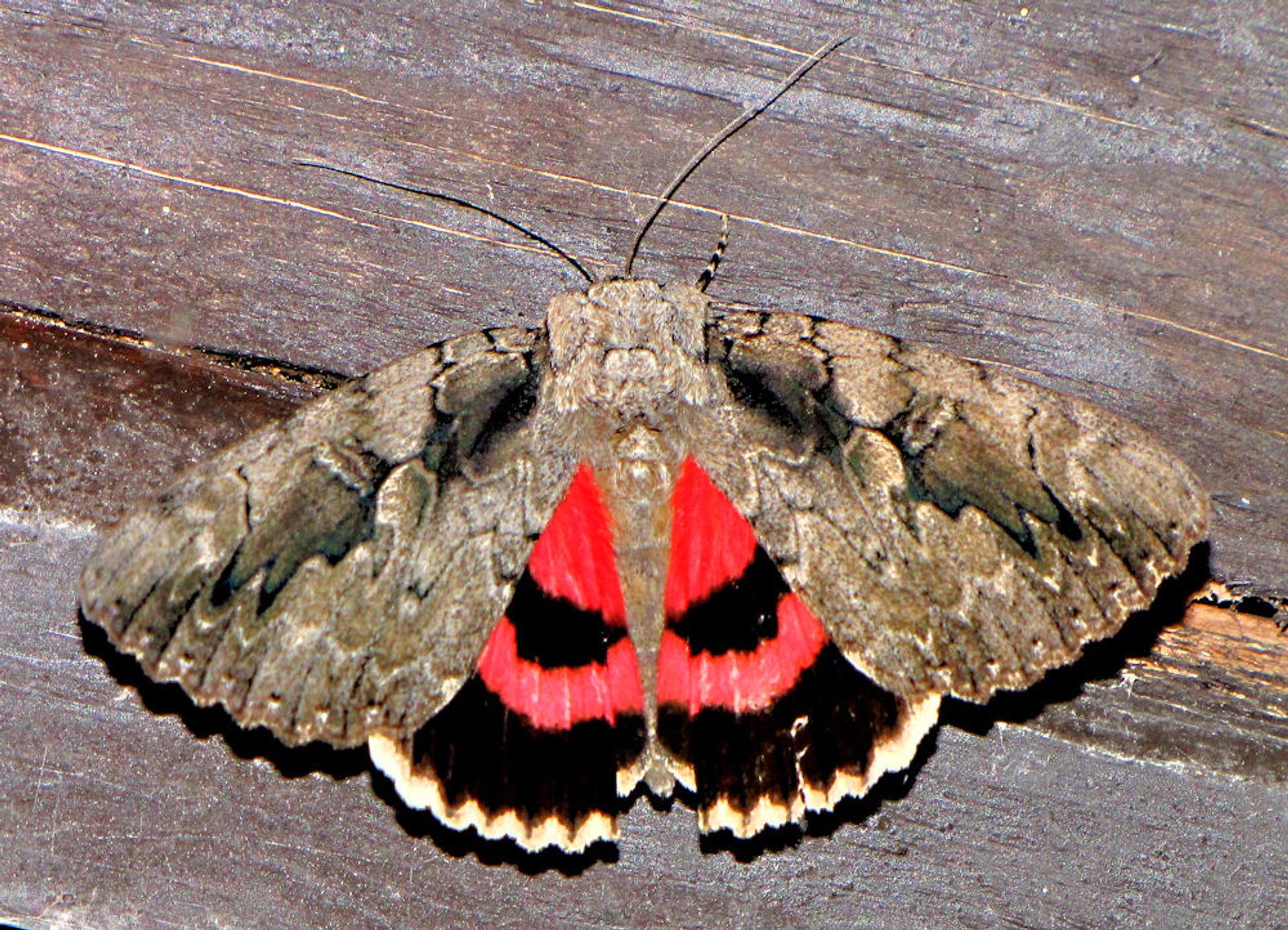
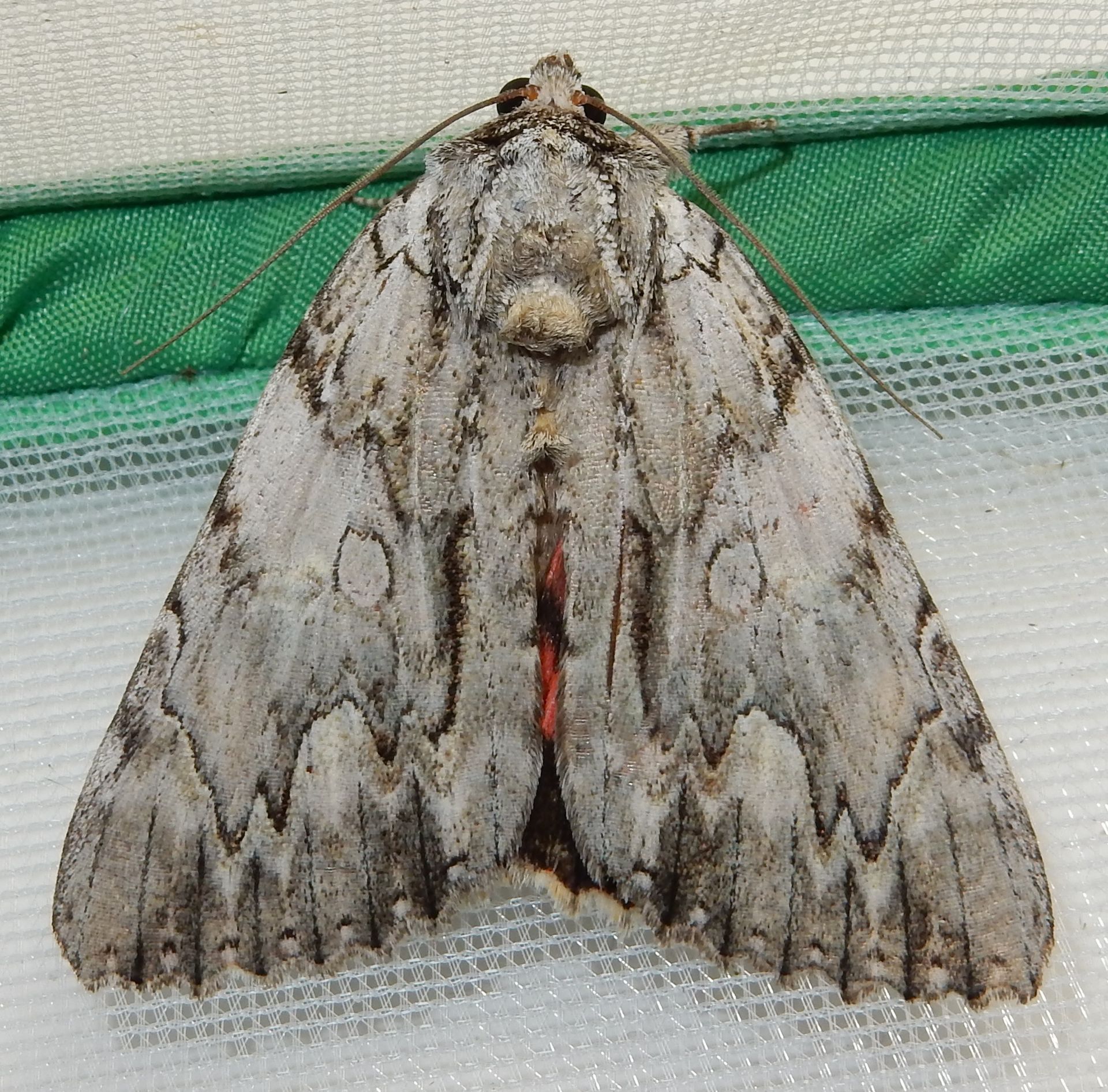
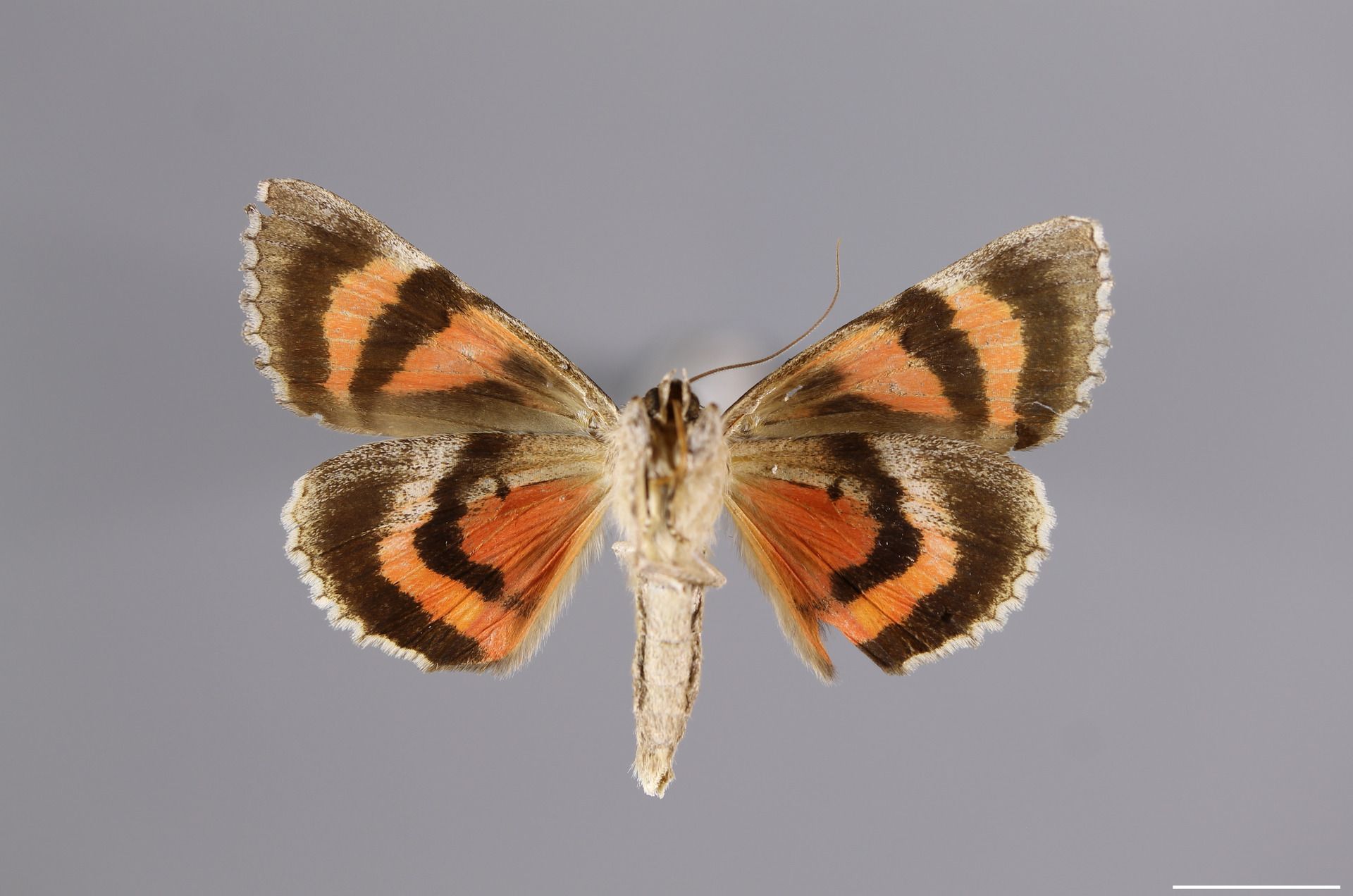
Catocala coccinata is a large underwing in the Erebidae, first described by Augustus Radcliffe Grote in 1872. are characterized by cryptic forewings that conceal brightly colored hindwings, which are exposed when the moth is disturbed. The occurs across eastern North America, with larvae specializing on oak species. Two are recognized: the nominate form and C. c. sinuosa from Florida.
Pronunciation
How to pronounce Catocala coccinata: /ˌkætəˈkeɪlə ˌkɒksɪˈneɪtə/
These audio files are automatically generated. While they are not always 100% accurate, they are a good starting point.
Identification
Distinguished from other Catocala by the combination of bright scarlet to orange-red hindwings with a single round black discal spot and broad black terminal band. Forewings lack the strong white or pale markings present in some . Most similar to C. ilia and C. concumbens, but those species typically show pink or salmon-colored hindwings rather than true scarlet. C. c. sinuosa from Florida has more sinuate (wavy) dark lines on forewings. active June–September.
Images
Habitat
Deciduous and mixed forests, particularly oak-dominated woodlands. Associated with riparian corridors and river valleys where oaks occur. Extends onto Great Plains following river systems.
Distribution
Eastern North America from southern Canada (Manitoba, Saskatchewan, Ontario, Quebec) south through the eastern United States to Florida. Westward distribution follows major river valleys onto the Great Plains.
Seasonality
on wing June to September, with timing varying by latitude and local conditions. Single per year in northern range, possibly partial second generation in southern areas.
Diet
Larvae feed exclusively on Quercus , including Quercus macrocarpa (bur oak). feeding habits unknown; likely do not feed or take only liquids.
Host Associations
- Quercus - larval plantmultiple oak
- Quercus macrocarpa - larval plantbur oak specifically documented
Life Cycle
Complete with , larva, pupa, and stages. Larvae are solitary feeders on oak foliage. stage not explicitly documented in sources, but likely as pupa in soil or leaf litter based on patterns. Adults emerge in summer.
Behavior
. occasionally attracted to lights but typically remain on periphery of lighted areas; often found resting on tree trunks where cryptic forewings provide camouflage. When disturbed, rapidly opens wings to expose bright hindwings, presumably as startle defense against . Normally rests with forewings held together over back, completely concealing hindwings.
Ecological Role
Larval herbivore on oaks; contributes to nutrient cycling and energy transfer in forest . stage likely serves as prey for bats, birds, and other .
Human Relevance
Subject of interest among lepidopterists and enthusiasts. Featured in National Moth Week outreach as representative of underwing moth diversity. No significant economic impact documented.
Similar Taxa
- Catocala iliaSimilar size and , but hindwings pink to salmon-colored with more complex dark banding pattern, not true scarlet
- Catocala concumbensHindwings pink to rose-colored with black bands; lacks the bright scarlet-orange ground color of C. coccinata
- Catocala aholibahLarger with orange hindwings, but pattern includes more extensive black markings and different forewing pattern
Sources and further reading
- BugGuide
- Wikipedia
- GBIF taxonomy match
- iNaturalist taxon
- NCBI Taxonomy
- Catalogue of Life
- A Gathering of Lepidopterists: Who's Who of the Butterfly, Moth Experts | Bug Squad
- Got Moths? Celebrate National Moth Week and Global Citizen Science
- Bug Eric: National Moth Week Recap, 2015
- Bug Eric: National Moth Week Recap for Colorado Springs
- Bug Eric: National Moth Week 2024 Recap from Kansas City
- Bug Eric: New Mexico Night Bugs