
Catocala amica-lineella
Girlfriend Underwing
Catocala amica-lineella is a of underwing in the Erebidae. Like other members of the Catocala, it exhibits the characteristic underwing pattern: cryptic, bark-mimicking forewings that conceal brightly colored hindwings. The hindwings are typically marked with bold bands of orange, red, or black that are flashed when the moth is disturbed. The species name 'amica-lineella' distinguishes it from the closely related C. amica, with which it was historically confused.
Pronunciation
How to pronounce Catocala amica-lineella: //ˌkætəˈkeɪlə əˈmɪkə lɪˈnɛlə//
These audio files are automatically generated. While they are not always 100% accurate, they are a good starting point.
Identification
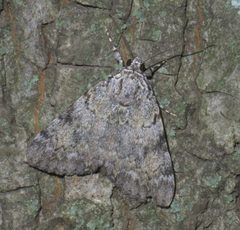
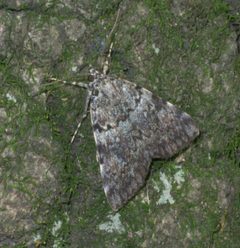
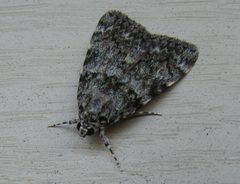
Distinguished from the similar Catocala amica by subtle differences in forewing pattern and hindwing coloration. The forewings are gray-brown with fine dark lines and a small distinct discal spot. Hindwings typically show orange or reddish-orange bands with black markings, though individual variation exists. Accurate identification often requires examination of genitalia or reference to regional distribution patterns, as the two overlap in range and are easily confused.
Images
Habitat
Deciduous woodlands and forests, particularly areas with oak trees. Associated with mature hardwood forests where plants occur.
Distribution
Eastern North America, with records from the northeastern United States westward through the Great Lakes region. Range overlaps with and is often confused with that of Catocala amica.
Seasonality
fly in late summer, typically July through August, with peak activity varying by latitude.
Diet
Larvae feed on oak (Quercus), including various red and white oaks. Specific associations require further documentation.
Host Associations
- Quercus - larval plantvarious oak
Behavior
are and come to lights, though often remain on the periphery of illuminated areas rather than landing directly on sheets. When at rest on tree bark, the cryptic forewings provide effective camouflage. If disturbed, the flashes its brightly colored hindwings in a startle display, then rapidly escapes by .
Ecological Role
Larvae function as folivores on oak trees, contributing to nutrient cycling in forest . serve as prey for including bats and owls; the startle display may reduce risk.
Human Relevance
Occasionally encountered by enthusiasts during blacklighting events. The is of interest to lepidopterists studying underwing moth diversity and species boundaries.
Similar Taxa
- Catocala amicaExtremely similar in appearance and historically confused with C. amica-lineella; separation based on subtle wing pattern differences and geographic distribution
- Catocala lineellaFormerly considered ; now recognized as distinct with different range and preferences
Sources and further reading
- BugGuide
- A Gathering of Lepidopterists: Who's Who of the Butterfly, Moth Experts | Bug Squad
- Got Moths? Celebrate National Moth Week and Global Citizen Science
- Bug Eric: National Moth Week Recap, 2015
- Bug Eric: National Moth Week Recap for Colorado Springs
- Bug Eric: National Moth Week 2024 Recap from Kansas City
- Bug Eric: New Mexico Night Bugs