
Halysidota davisii
Edwards, 1874
Davis' Tussock Moth
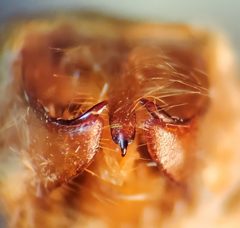
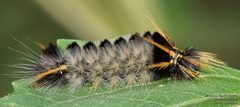
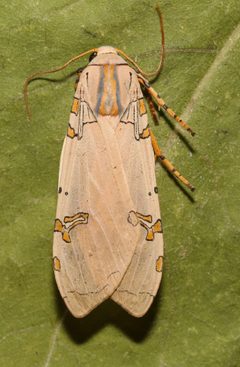
Halysidota davisii, commonly known as Davis' tussock , is a of tiger moth in the Erebidae. It was described by Henry Edwards in 1874 and is named in honor of Dr. Davis. The species has a restricted distribution in the southwestern United States. are active during summer months, with larvae feeding on specific plants.
Pronunciation
How to pronounce Halysidota davisii: /hæləˈsɪdoʊtə dəˈvɪsi.aɪ/
These audio files are automatically generated. While they are not always 100% accurate, they are a good starting point.
Images
Distribution
Found in Utah, Arizona, New Mexico, and north-western Texas.
Seasonality
are on wing from July to August.
Diet
Larvae have been recorded feeding on Quercus emoryi (Emory oak) and Celtis (hackberries).
Host Associations
- Quercus emoryi - larval food plant
- Celtis - larval food plant
Similar Taxa
- Halysidota tessellarisBoth are Halysidota tussock moths with banded or tessellated patterns; H. tessellaris has a broader eastern North American distribution and different larval preferences including Ulmus and Carya.
More Details
Etymology
The is named in honor of Dr. Davis.
Sources and further reading
- BugGuide
- Wikipedia
- GBIF taxonomy match
- iNaturalist taxon
- NCBI Taxonomy
- Catalogue of Life
- Megalopygidae | Beetles In The Bush
- Bug Eric: New Mexico Dragonfly Blitz - Day 3
- Bug Eric: National Moth Week 2024 Recap from Kansas City
- 🌿 Botanizing w/ the WGNSS Botany Group at Victoria Glades Preserve | Beetles In The Bush