
Virbia opella
Grote, 1863
tawny holomelina, Tawny Virbia Moth
Virbia opella is a small tiger moth in the Erebidae, historically known as the tawny holomelina. It was described by Grote in 1863 and later transferred from Holomelina to Virbia following phylogenetic revision. The occurs in eastern and central North America, where it inhabits oak-dominated forests and produces multiple annually.
Pronunciation
How to pronounce Virbia opella: /ˈvɪr.bi.ə oʊˈpɛl.ə/
These audio files are automatically generated. While they are not always 100% accurate, they are a good starting point.
Identification
Small size (forewings 11-12 mm) and tawny coloration distinguish it from larger tiger moths. Formerly placed in Holomelina, now included in Virbia based on phylogenetic analysis showing Holomelina is with respect to Virbia. Specific diagnostic characters for field identification are not documented.
Images
Appearance
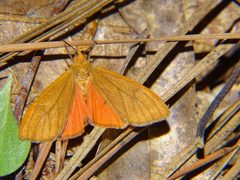
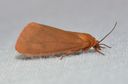
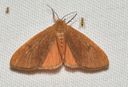
Small with forewings approximately 11 mm in males and 12 mm in females. Coloration is tawny or orange-brown, consistent with the . Specific wing pattern details are not well documented in available sources.
Habitat
Oak forests and scrub oak forests. Specific microhabitat preferences within these forest types are not documented.
Distribution
United States from Maine west to Illinois and south to Texas. The is part of a North American fauna derived from multiple events from the ancestral area of the in southwestern United States and Mexico.
Seasonality
Multiple per year throughout most of the range. In Louisiana, are on wing from November to February with three generations annually. Specific periods for northern portions of the range are not documented.
Diet
Larvae have been reared on dandelion (Taraxacum). feeding habits are not documented.
Host Associations
- Taraxacum - larval food plantreared on dandelion
Life Cycle
Multiple per year in most of range. Three generations annually in Louisiana. Specific details of , larval, and pupal stages are not documented.
Similar Taxa
- Virbia aurantiacaFormerly in separate Holomelina; now congeneric. Both share tawny-orange coloration and similar size range.
- Other Virbia speciesMany were formerly classified in Holomelina; phylogenetic revision placed all in Virbia. Accurate identification to level may require examination of genitalia.
Misconceptions
Historically classified in the Holomelina; phylogenetic analysis demonstrated Holomelina is with respect to Virbia, leading to synonymization under Virbia.
More Details
Taxonomic History
Originally described as Crocota opella by Grote in 1863. Transferred to Holomelina, then to Virbia following Schmidt (2009) who demonstrated through phylogenetic analysis that Holomelina is with respect to Virbia and should be synonymized.
Biogeographic Context
Part of a composite North American fauna north of Mexico, representing at least two events from the ancestral area of Virbia in southwestern United States and Mexico.