
Apantesis quenseli
(Paykull, 1793)
Labrador Tiger Moth
Apantesis quenseli, the Labrador tiger moth, is a of tiger moth in the Erebidae. It inhabits high-altitude alpine environments and polar regions across the Northern Hemisphere. The species was transferred from the Grammia to Apantesis in 2016, reflecting revised understanding of tiger moth . Multiple have been described across its broad geographic range.
Pronunciation
How to pronounce Apantesis quenseli: /əˌpænˈtiːsɪs ˈkwɛnsəlaɪ/
These audio files are automatically generated. While they are not always 100% accurate, they are a good starting point.
Identification
The can be distinguished from similar Apantesis species by its restricted high-elevation and polar distribution pattern. In Central Europe, it is found only in the Central Alps at 2,000–2,700 m elevation, separating it from lower-elevation . identification requires examination of geographic origin and subtle morphological differences.
Images
Appearance
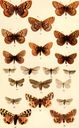
Wingspan 26–42 mm. Specific coloration and pattern details are not documented in available sources.
Habitat
Alpine meadows and tundra at high elevations. In Central Europe, restricted to Central Alps at 2,000–2,700 m. Occupies polar and subpolar tundra at northern latitudes.
Distribution
Circumpolar distribution in the Northern Hemisphere. Present in Polar Eurasia, mountains of Siberia, Mongolia, North China, Japan (Mt. Daisetsu on Hokkaido), Polar North America, Northern Scandinavia, and the Central Alps of Europe.
Diet
Larvae feed on Alchemilla alpina and Plantago alpina. feeding habits are not documented.
Host Associations
- Alchemilla alpina - larval food plant
- Plantago alpina - larval food plant
Life Cycle
Complete with , larva, pupa, and stages. Larvae are known to feed on specific alpine plants. Detailed timing is not documented.
Behavior
; attracted to ultraviolet light sources. are active during the summer months in alpine and polar regions.
Ecological Role
Larval herbivore in alpine . Contributes to nutrient cycling and serves as prey for higher . Specific ecological interactions are not well documented.
Human Relevance
Subject of entomological research and citizen science documentation, particularly during National Week events. No significant economic or cultural importance documented.
Similar Taxa
- Other Apantesis speciesShare similar tiger moth and were formerly classified in the Grammia together. A. quenseli is distinguished by its high-elevation and polar distribution.
- Grammia speciesFormerly classified together; A. quenseli was moved to Apantesis based on phylogenetic analysis, separating it from remaining in Grammia.
More Details
Taxonomic history
Originally described as Bombyx quenseli by Paykull in 1793. Later transferred to Grammia, then to Apantesis in 2016 along with other former Grammia, Holarctia, and Notarctia . This reclassification reflects molecular phylogenetic studies of tiger moth relationships.
Subspecies
Six recognized: A. q. quenseli ( nominate, Europe), A. q. gelida (Northern Europe), A. q. liturata (Siberia), A. q. saura (Kazakhstan), A. q. zamolodchikovi (Wrangel Island, Russia), and A. q. daisetsuzana (Mt. Daisetsu, Japan).
Sources and further reading
- BugGuide
- Wikipedia
- GBIF taxonomy match
- iNaturalist taxon
- NCBI Taxonomy
- Catalogue of Life
- Bug Eric: National Moth Week 2021 Review
- Bug Eric: Remembering National Moth Week 2018
- Sphingidae | Beetles In The Bush | Page 2
- Bug Eric: October 2018
- The Moth and Me | Beetles In The Bush
- Saturniidae | Beetles In The Bush | Page 2