
Apantesis elongata
(Stretch, 1885)
Columbia Tiger Moth
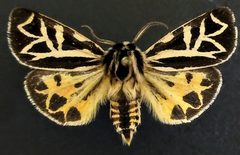
Apantesis elongata is a tiger moth in the Erebidae, first described by Stretch in 1885. It was transferred from the Grammia to Apantesis in a taxonomic revision that consolidated several related genera. The species occupies montane meadows in western North America and has been documented feeding on Claytonia lanceolata as a larva.
Pronunciation
How to pronounce Apantesis elongata: //əˈpæn.tə.sɪs iːˈlɔŋ.ɡɑː.tə//
These audio files are automatically generated. While they are not always 100% accurate, they are a good starting point.
Identification
Forewing length is approximately 14.9 mm. The can be distinguished from similar Apantesis species by its geographic restriction to the Columbia River basin and adjacent montane regions, combined with its association with dry subalpine and montane meadow . The taxonomic history involving transfer from Grammia may cause confusion in older literature.
Images
Habitat
Dry, montane, and subalpine meadows. Occupies elevations characteristic of montane zones in the Pacific Northwest and northern Rocky Mountains.
Distribution
Western North America from south-western British Columbia and west-central Alberta, south to Montana and Washington state. Also recorded from north-eastern Oregon.
Seasonality
are active from mid-May to late August.
Diet
Larvae feed on Claytonia lanceolata (western springbeauty), a forb native to western North America.
Host Associations
- Claytonia lanceolata - larval food plantA documented ; feeding has been recorded on this specifically.
Similar Taxa
- Apantesis vittataOverlaps in geographic range and preference in parts of the Pacific Northwest; both occupy montane meadows.
- Grammia species (now Apantesis)Formerly classified in the same ; literature prior to the taxonomic revision may use Grammia elongata.