
Phyllodesma
Hübner, 1820
Species Guides
3- Phyllodesma americana(American Lappet Moth)
- Phyllodesma coturnix
- Phyllodesma occidentis
Phyllodesma is a Holarctic of lappet moths in the Lasiocampidae, first described by Jacob Hübner in 1820. The genus comprises approximately 17 recognized distributed across North America, Europe, and Asia. Species in this genus are generally associated with broadleaf plants, though specific associations vary by species. The genus is characterized by with cryptic, leaf-like wing patterns that provide camouflage against vegetation.
Pronunciation
How to pronounce Phyllodesma: /fɪlˈloʊdəzmə/
These audio files are automatically generated. While they are not always 100% accurate, they are a good starting point.
Identification
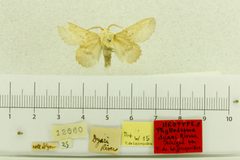
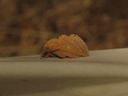
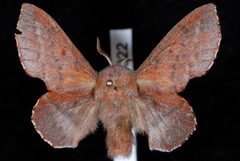
of Phyllodesma typically exhibit broad, rounded forewings with muted brown, gray, or greenish coloration that resembles dead or living leaves. The wing margins are often irregular or notched, enhancing the leaf-mimicry effect. are bipectinate (feathery) in males and simple or weakly pectinate in females, a trait common to Lasiocampidae. At rest, wings are held flat or slightly tented over the body. Specific species identification requires examination of genitalia or detailed wing pattern analysis, as external is often similar among .
Images
Habitat
of Phyllodesma inhabit temperate and forest , including deciduous and mixed woodlands. They are associated with stands of their larval plants, which include oak (Quercus), aspen/poplar (Populus), and other broadleaf trees and shrubs. range from lowland forests to montane regions depending on the species.
Distribution
Holarctic distribution encompassing North America, Europe, and Asia. North American records include the northeastern United States (Vermont) and presumably adjacent Canada. European distribution includes Scandinavia (Denmark, Norway, Sweden) and extends eastward through Russia. Asian distribution includes Japan, Mongolia, and China.
Seasonality
period varies by and latitude, generally occurring in late spring to summer. In temperate regions, most species fly from May to July. Some species may exhibit partial bivoltinism in southern portions of their range, though patterns appear more common.
Diet
Larvae feed on leaves of broadleaf trees and shrubs. Documented associations include Quercus (oaks), Populus (aspens, poplars), and other woody plants; specific host ranges vary among . do not feed.
Host Associations
- Quercus - larval oaks
- Populus - larval aspens, poplars
Life Cycle
Development follows the typical lasiocampid pattern: are laid in batches on plant twigs or bark. Larvae are gregarious in early instars, becoming solitary later. They feed externally on foliage and construct silken resting pads on host plant stems. occurs in a tough, oval cocoon attached to host plant stems or fallen leaves on the ground. The cocoon incorporates leaf fragments and debris for camouflage. stage varies; some overwinter as eggs, others as pupae in cocoons.
Behavior
are and attracted to light. Larvae display characteristic : when disturbed, they may raise the body and retract the into the , revealing eversible (osmeteria) that emit defensive compounds. They also thrash violently when handled. The leaf-mimicry of adults provides effective against avian .
Ecological Role
Larvae function as folivores in forest , consuming broadleaf tree foliage. are not documented, suggesting generally stable, low- populations. They serve as prey for insectivorous birds, , and other natural enemies. The silk cocoons may provide microhabitat for other small after .
Human Relevance
No significant economic importance. Occasionally attracted to artificial light sources near forested areas. Larvae are not known to cause notable defoliation of ornamental or timber trees. The is of interest to lepidopterists and naturalists due to its effective camouflage and Holarctic distribution pattern.
Similar Taxa
- GastropachaSimilar leaf-mimicking lasiocampid with rounded wings; distinguished by differences in wing venation and male genitalia structure
- LasiocampaRelated lasiocampine with broader, more triangular wings and different resting posture; often larger with more contrasting wing patterns
- MalacosomaTent caterpillar moths in same ; distinguished by more slender wings, often brighter coloration, and larvae that construct communal silk tents
More Details
Nomenclature
The name Phyllodesma derives from Greek roots referring to leaf-like appearance. The original spelling by Hübner has been conserved. Some were formerly placed in related genera including Epicnaptera.
Species diversity
Approximately 17 are currently recognized, with the highest diversity in the Palearctic region. The North American fauna includes at least two species (P. americana, P. occidentis), though taxonomic boundaries in this group require further study.