
Phyllodesma americana
(Harris, 1841)
American Lappet Moth
Species Guides
1Phyllodesma americana, commonly known as the American , is a in the Lasiocampidae. It occurs across much of North America, from eastern Canada to the Pacific coast and from the southern United States north to Alaska and Yukon. fly from spring through late summer, with timing varying by latitude. The species exhibits or depending on geographic location.
Pronunciation
How to pronounce Phyllodesma americana: /ˌfɪloʊˈdɛzmə ˌæməˈrɪkənə/
These audio files are automatically generated. While they are not always 100% accurate, they are a good starting point.
Identification
The American can be distinguished from other lappet moths ( Lasiocampidae) by its specific geographic range and period. Within its , it is the only Phyllodesma with this broad transcontinental North American distribution. Definitive identification to species level may require examination of genitalia or larval associations, as superficial resemblance to other lappet moths is common.
Images
Appearance
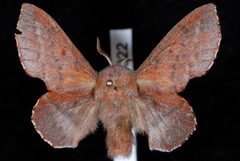
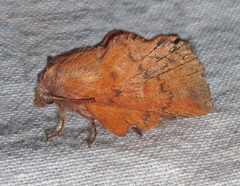
have a wingspan of 29–49 mm. The exhibits the characteristic form with a somewhat stout, furry body. Coloration and pattern details are not explicitly documented in available sources.
Habitat
Occurs in diverse forested and wooded across its broad North American range. Larval include both deciduous and some evergreen woody plants, suggesting adaptability to varied woodland conditions. Specific microhabitat preferences for are not well documented.
Distribution
Transcontinental North American distribution: from Nova Scotia and New Brunswick west to British Columbia and Yukon; south through the eastern United States to northern Florida, west through Texas to California. The occupies a wide latitudinal and longitudinal range spanning , temperate, and subtropical zones.
Seasonality
period varies by region: March to September with two in the southern part of the range; May to July in eastern Ontario; April to August in Ohio. One generation per year occurs in northern portions of the range, two generations in the south.
Diet
Larvae feed on leaves of woody plants including Alnus (alders), Betula (birches), Quercus (oaks), Populus (poplars), Salix (willows), Ceanothus velutinus (snowbrush), Chrysolepis chrysophylla (golden chinquapin), and members of Rosoideae (rose ). feeding habits are not documented.
Host Associations
- Alnus - larval food plant
- Betula - larval food plant
- Quercus - larval food plant
- Populus - larval food plant
- Salix - larval food plant
- Ceanothus velutinus - larval food plant
- Chrysolepis chrysophylla - larval food plant
- Rosoideae - larval food plant
Life Cycle
The exhibits either one or two per year depending on latitude. In northern areas, a single generation occurs; in southern areas, two generations are produced with on wing from March through September. Specific details of , larval, and pupal stages are not documented in available sources.
Ecological Role
As a folivorous larva, the contributes to nutrient cycling in forest through herbivory on diverse woody plant . Its broad range suggests it functions as a herbivore across multiple forest types. Specific ecological impacts or interactions are not quantified in available literature.
Human Relevance
No significant documented economic or medical importance. Not known to be a pest of ornamental or agricultural plants despite its broad range. The is occasionally encountered by naturalists and enthusiasts due to its relatively common occurrence across North America.
Similar Taxa
- Other LasiocampidaeMembers of the share general body form, furry appearance, and larval habits; specific identification requires detailed examination.
- Phyllodesma suberifoliaEuropean with similar ; distinguished by geographic separation (Palearctic distribution).
More Details
Subspecies
Six have been described: Phyllodesma americana rockiesensis, P. a. borealis, P. a. alascensis, P. a. californica, P. a. dyari, and P. a. celsivolans. These likely reflect geographic variation across the ' extensive range, though modern taxonomic treatment of these forms may require revision.
Sources and further reading
- BugGuide
- Wikipedia
- GBIF taxonomy match
- iNaturalist taxon
- NCBI Taxonomy
- Deerly departed: food for flesh-recycling carrion beetles - Margined carrion beetle, Oiceoptoma noveboracense, and American carrion beetle, Necrophila americana — Bug of the Week
- Unwelcome guests in Hawai’i: American cockroach, Periplaneta americana, German cockroach, Blattella germanica, and Western yellowjacket, Vespula pensylvanica — Bug of the Week
- As a Watershed is Urbanized, Damselflies Show Declines
- Silphidae | Beetles In The Bush
- Explorer or Wallflower? Study Shines Light on Cockroach Personalities
- Botanizing at St. Joe State Park | Beetles In The Bush