
Haematopis grataria
(Fabricius, 1798)
Chickweed Geometer Moth, Chickweed Geometer
Haematopis grataria, the Chickweed , is a of geometrid found throughout North America. It is a common and dependable species during National Moth Week events, frequently observed in eastern Kansas and other regions. The species belongs to the Geometridae, known for their characteristic looping movement of caterpillars. Males have been documented at light sheets and flushed from vegetation during daytime hours.
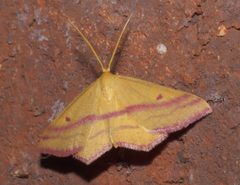
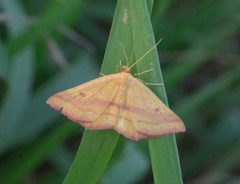
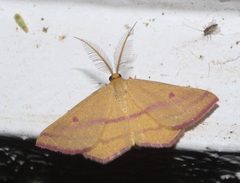
Pronunciation
How to pronounce Haematopis grataria: /hæməˈtoʊpɪs ɡræˈtɛəriə/
These audio files are automatically generated. While they are not always 100% accurate, they are a good starting point.
Images
Distribution
Found throughout the United States. In Canada, occurs from Quebec to Alberta, north to the Northwest Territories. Documented in Kansas, with observations in Leavenworth County.
Seasonality
Active during summer months. Documented during National Week (mid-to-late July) in eastern Kansas, where it is described as a "pretty dependable " for this event period.
Host Associations
- chickweed - likely larval suggests association with chickweed (Stellaria or Cerastium ), though specific plant documentation is not provided in sources
Behavior
are attracted to light. Males have been observed at blacklight sheets. Individuals can be flushed from vegetation during daytime hours.
Human Relevance
Serves as a reliable for National Week citizen science events. Frequently photographed and documented by amateur entomologists.
More Details
National Moth Week observations
Documented as a consistent find during National Week in eastern Kansas across multiple years (2021, 2024). In 2021, a male was photographed at a light sheet. In 2024, observed in a yard in Leavenworth, Kansas during the event period.