
Scopula sentinaria
(Geyer, 1837)
Scopula sentinaria is a geometrid with a transcontinental distribution spanning northern North America and northern Eurasia. The occupies dry shrubby clearings and edge across and subarctic regions. are active during early summer in a single , with larvae developing on Polygonum aviculare. The species is notable for its broad geographic range and to open, disturbed habitats at high latitudes.
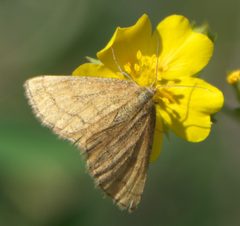
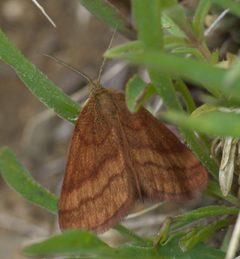
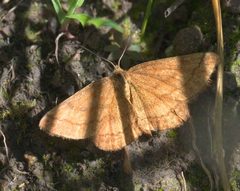
Pronunciation
How to pronounce Scopula sentinaria: /ˈskoʊpjʊlə ˌsɛntɪˈnɛriə/
These audio files are automatically generated. While they are not always 100% accurate, they are a good starting point.
Identification
can be distinguished from similar Scopula by the combination of size (20–27 mm wingspan), association with dry shrubby clearings at northern latitudes, and the characteristic wing pattern of transverse lines on a pale brown ground. The single in early summer separates it from multi-brooded southern . Larvae are identified by association with Polygonum aviculare and the typical geometrid larval with reduced number.
Images
Habitat
Dry shrubby clearings and edges, including open areas within forest, prairie-forest transition zones, and subarctic shrublands. The shows preference for disturbed or early successional with abundant low-growing vegetation.
Distribution
North America: Alaska to Labrador, south through prairie provinces to southern Manitoba, Saskatchewan, Alberta, and British Columbia; south in the Rocky Mountains to Colorado. Eurasia: northern Russia and the Sayan Mountains.
Seasonality
are on wing from early June to late July in one in North America. Larval development occurs through summer and fall, with fourth or fifth instar larvae .
Diet
Larvae feed on Polygonum aviculare (knotweed). feeding habits are not documented.
Host Associations
- Polygonum aviculare - larval food plantConfirmed through rearing records
Life Cycle
(one per year). are laid on plant foliage. Larvae feed through summer and early fall, with later instars entering to overwinter. occurs in spring, with emerging in early summer.
Behavior
are and attracted to light. Larvae are cryptic feeders on low-growing herbaceous vegetation, using their characteristic looping locomotion to move between feeding sites.
Ecological Role
As a primary consumer, larvae transfer energy from Polygonum aviculare to higher . The contributes to the herbivore of early successional and edge in and subarctic .
Human Relevance
No significant economic or cultural importance. The may serve as an indicator of intact early successional in northern regions.
Similar Taxa
- Scopula limboundataSimilar size and wing pattern, but occurs in eastern deciduous forest rather than shrublands, and has multiple in the south
- Other Scopula speciesMany share similar wing patterns; precise identification requires examination of genitalia or association with specific and geographic location
More Details
Subspecies
Three are recognized: Scopula sentinaria sentinaria (North America), Scopula sentinaria rufinaria (Staudinger, 1861) from northern Russia, and Scopula sentinaria rufinularia (Staudinger, 1901) from the Sayan Mountains.
Taxonomic History
Originally described by Geyer in 1837. The has undergone relatively little taxonomic revision, with primarily distinguished by geographic distribution and minor coloration differences.