
Scopula cacuminaria
(Morrison, 1874)
Frosted Tan Wave
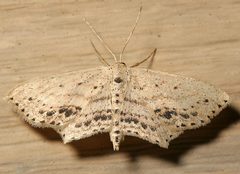
Scopula cacuminaria, commonly known as the frosted tan wave, is a small geometrid described by Herbert Knowles Morrison in 1874. have a wingspan of 18–23 mm and are active in July in Alberta, Canada. The occurs across southern Canada from the Maritimes to southern British Columbia, extending south to Texas.
Pronunciation
How to pronounce Scopula cacuminaria: //ˈskoʊpjʊlə ˌkækjʊˈmɪnɛəriə//
These audio files are automatically generated. While they are not always 100% accurate, they are a good starting point.
Identification
The small size (wingspan 18–23 mm) and July period in Alberta may help distinguish this from similar Scopula species in the same region. Detailed diagnostic features for distinguishing S. cacuminaria from are not available in the provided sources.
Images
Appearance
have a wingspan of 18–23 mm. The exhibits the typical slender-winged, delicate form characteristic of geometrid moths. Specific coloration and pattern details are not well documented in available sources.
Habitat
Specific associations are not documented in available sources. As a member of the Scopula, it likely occurs in open, grassy, or herbaceous habitats typical for the group.
Distribution
Transcontinental in southern Canada, ranging from the Maritimes to southern British Columbia, with southern extension into the United States reaching Texas. Specific distribution records include Alberta, Manitoba, Saskatchewan (Canada), and Vermont (USA).
Seasonality
are on wing in July in Alberta, Canada. The period in other parts of the range is not documented.
Similar Taxa
- Scopula limboundataAnother Scopula occurring in North America east of the Rocky Mountains; both are small geometrids with similar overall appearance, though S. limboundata has distinctive wing patterns as a 'large lace-border '
- Scopula marginepunctataA related Scopula (Mullein Wave) found in Europe; shares the same and general
More Details
Taxonomic history
Originally described as Acidalia cacuminaria by Morrison in 1874 before transfer to the Scopula.
Data limitations
Detailed biological information for this is sparse in available sources. Most records derive from specimen collections and basic distributional surveys rather than focused ecological study.