
Leptostales
Möschler, 1890
Species Guides
6- Leptostales crossii(Cross's wave moth)
- Leptostales ferruminaria(light-ribboned wave)
- Leptostales hepaticaria(Lemon-bordered Wave)
- Leptostales laevitaria(Raspberry Wave)
- Leptostales pannaria(Pannaria Wave)
- Leptostales rubromarginaria(Dark-ribboned Wave)
Leptostales is a of geometrid moths in the Sterrhinae, established by Möschler in 1890. The genus contains multiple , with Leptostales ignifera being the most studied due to its potential as a biocontrol agent for the weed camara. Members are leaf-feeding found in subtropical regions of the Americas.
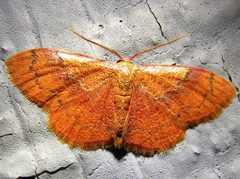
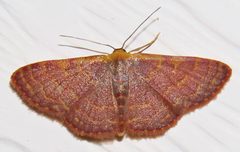
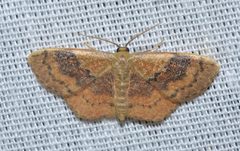
Pronunciation
How to pronounce Leptostales: /lɛptoʊˈstɑːliːz/
These audio files are automatically generated. While they are not always 100% accurate, they are a good starting point.
Images
Habitat
Subtropical regions; specifically recorded from subtropical Florida and Mexico for at least one .
Distribution
Native to subtropical parts of North America (Florida, USA) and Mexico; at least one proposed for introduction to South Africa for biocontrol purposes.
Diet
Leaf-feeding; Leptostales ignifera feeds on camara as preferred , with some African Lippia as marginal hosts.
Host Associations
- Lantana camara - preferred Primary for L. ignifera; variety 029WP most suitable in laboratory trials
- Lippia species - marginal African ; very marginal for L. ignifera
Life Cycle
Quick-developing (documented for L. ignifera); complete with , larva, pupa, and stages typical of Lepidoptera.
Behavior
Voracious leaf-feeder; shows varietal preference among different camara varieties in laboratory conditions.
Ecological Role
Potential biocontrol agent for camara; natural role in native not documented.
Human Relevance
Investigated for of the weed camara in South Africa; permission granted for release of L. ignifera based on specificity studies.
More Details
Biocontrol research
Leptostales ignifera has been extensively studied under laboratory conditions for potential release as a biocontrol agent. specificity trials demonstrated strong preference for camara, supporting its suitability for . However, laboratory performance may not fully predict field establishment and efficacy.