
Leptostales laevitaria
(Geyer, 1837)
Raspberry Wave
Leptostales laevitaria, commonly known as the Raspberry Wave, is a of geometrid in the Sterrhinae. The species was described by Geyer in 1837 and occurs in North America. It belongs to a of wave moths characterized by relatively broad wings with wavy transverse lines.
Pronunciation
How to pronounce Leptostales laevitaria: /ˌlɛptoʊˈsteɪliːz ˌleɪvɪˈteəriə/
These audio files are automatically generated. While they are not always 100% accurate, they are a good starting point.
Identification
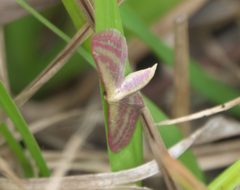
The combination of raspberry or pinkish-brown coloration with fine wavy transverse lines distinguishes this from many other North American geometrids. Similar species in the Leptostales may require examination of genitalia for definitive identification. The overall 'wave' pattern is shared with other Sterrhinae, but the distinctive pinkish-raspberry tone is a useful field mark.
Images
Appearance
Forewings broad with a characteristic raspberry or pinkish-brown ground color. Pattern consists of fine, wavy transverse lines across the wing surface, typical of wave moths (Sterrhinae). Wing margins are relatively even, not strongly scalloped. Hindwings similar in coloration and pattern to forewings but slightly paler. Body slender, matching the general Geometridae form.
Distribution
North America
Similar Taxa
- Other Leptostales speciesShare the same and general wave- appearance; may require detailed examination to distinguish
- Other Sterrhinae mothsSimilar wavy transverse line patterns on wings, but usually differ in ground coloration
More Details
Taxonomic placement
Leptostales laevitaria is placed in the Sterrhinae, a group commonly known as wave moths due to the characteristic wavy lines on their wings. The Leptostales was historically sometimes placed in different subfamilies, but current classification firmly places it in Sterrhinae.