
Eulithis testata
(Linnaeus, 1761)
Chevron, Chevron Moth
A medium-sized geometrid with a Holarctic distribution, found across northern Eurasia and North America. are active from July to mid-September, with two per year in some regions and one in others. The has experienced significant declines in the UK since 1970.


Pronunciation
How to pronounce Eulithis testata: /juːˈlɪθɪs tɛsˈtɑːtə/
These audio files are automatically generated. While they are not always 100% accurate, they are a good starting point.
Identification
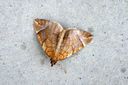
Distinguished from similar by six strongly angled chevron markings on forewing and semicircular brown blotch at termen. Forewing midfield bulges outward with dark crossline. Marginal field lacks wavy line, often appearing whitish.
Images
Habitat
Moorland, heathland, marshes, and sand dunes.
Distribution
Holarctic: Palearctic from Great Britain and Scandinavia south to the Alps, east through Russia and Russian Far East to Japan. Nearctic from Newfoundland to Vancouver Island and Alaska, south to New Jersey in the east and Colorado in the west.
Seasonality
on wing from July to mid-September. Two per year in the Netherlands; one generation per year in the UK and North America.
Diet
Larvae feed on Vaccinium, Salix, and Populus , primarily Populus tremula. Additional northern records include birch and heather.
Host Associations
- Salix species - larval foodplant
- Populus tremula - primary larval foodplant
- Vaccinium species - larval foodplant
- birch - larval foodplant (northern )
- heather - larval foodplant (northern )
Life Cycle
Overwinters as . emerge late June or July, flying at dusk until mid-September.
Behavior
fly at dusk.
Human Relevance
UK have shown significant decreases in both abundance and distribution since 1970. Subject of genomic research with chromosomally complete sequenced (308.1 Mb, 30 chromosomal pseudomolecules including Z , 16,167 protein-coding genes).
Similar Taxa
- Eulithis populataSimilar appearance and ; distinguished by wing pattern details and geographic range
- Ecliptopera speciesSister within tribe Cidariini; requires examination of genitalia or detailed wing pattern for separation