
Eupithecia satyrata
(Hübner, [1813])
Satyr Pug
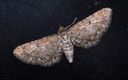
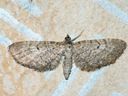
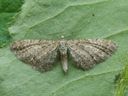
Eupithecia satyrata, commonly known as the satyr pug, is a small geometrid with a broad distribution spanning northern and central Europe, Russia, central Asia, Tibet, North Africa, and North America. exhibit considerable variation in wing pattern, with ground colors ranging from ash to grey or brownish. The is , with adults active from March through September. Larvae feed on the flowers of diverse plant including Achillea, Scabiosa, Solidago, Senecio, and Erica tetralix. The species has been documented as a visitor to apple flowers, contributing to pollination services.
Pronunciation
How to pronounce Eupithecia satyrata: /juːˈpɪθiə sætɪˈreɪtə/
These audio files are automatically generated. While they are not always 100% accurate, they are a good starting point.
Identification
Identification to level within Eupithecia requires careful examination of wing pattern details and genitalia dissection in many cases. E. satyrata can be distinguished from E. intricata by pattern details, though both are variable; authoritative references or genital examination may be necessary for definitive separation. The combination of forewing discal spot (present) versus hindwing discal spot (absent), indistinct terminal fascia with tiny tornal spot, and overall size range assists in field recognition. Given the extensive variation in this species, reference to Prout's account of variations is recommended. Final determination often requires microscopic examination of genitalia.
Images
Habitat
Occurs in diverse environments across its broad range. In North America, has been recorded in dry mixed conifer forest with oak at 7,000 feet elevation. Associated with supporting its larval plants, which include open and semi-open environments where Achillea, Scabiosa, Solidago, Senecio, and Erica tetralix occur. No specific habitat constraints documented beyond presence of suitable floral resources for larvae.
Distribution
Ireland; northern and central Europe from Scandinavia to northern Mediterranean; eastward throughout Russia, central Asia, western Siberia to Tibet; North Africa; North America.
Seasonality
on wing March to September. : one per year.
Diet
Larvae feed on flowers of Achillea, Scabiosa, Solidago, Senecio, and Erica tetralix. feeding habits not documented.
Host Associations
- Achillea - larval food plantflowers consumed
- Scabiosa - larval food plantflowers consumed
- Solidago - larval food plantflowers consumed
- Senecio - larval food plantflowers consumed
- Erica tetralix - larval food plantflowers consumed
Life Cycle
One per year. Larval stage feeds on flowers of plants. spans March through September. Detailed , pupal, and stages not documented in available sources.
Behavior
activity pattern. attracted to light. Documented visiting apple flowers at night, contributing to nocturnal pollination. Resting posture with narrow wings held in characteristic position typical of Eupithecia .
Ecological Role
Larval herbivore feeding on floral structures of diverse plant . documented as of apple (Malus), contributing to seed set comparable to pollination levels in at least one study. Potential role in pollination of other crops and wild plants not fully assessed.
Human Relevance
Documented contributor to pollination in apple production, with potential economic significance for fruit set. No other documented human interactions.
Similar Taxa
- Eupithecia intricataSimilar size, wing shape, and variable pattern; separation requires detailed examination of wing markings or genitalia
More Details
Subspecies
Multiple described: E. s. satyrata, E. s. callunaria Doubleday 1850, E. s. curzoni Gregson 1884, E. s. dodata Taylor 1906, E. s. intimata Pearsall 1908, E. s. juldusi Dietze 1910, E. s. rivosulata Dietze 1875 (Yakutia, Siberia), E. s. subatrata Staudinger 1871, E. s. zermattensis Wehrli 1928
Parasitoid associations
A Bassus (Braconidae: Agathidinae) has been observed visiting yarrow (Achillea), the same plant used by E. satyrata larvae, suggesting potential relationship