
Chesiadini
Stephens, 1850
Genus Guides
3Chesiadini is a tribe of geometer moths within the Larentiinae, established by Stephens in 1850. The tribe comprises approximately 12 recognized distributed primarily in the Holarctic region. Members are small to medium-sized with relatively broad wings and often subdued coloration. The tribe includes economically and ecologically significant such as those in the genus Aplocera.
Pronunciation
How to pronounce Chesiadini: //kɛˈsi.aˌdiː.ni//
These audio files are automatically generated. While they are not always 100% accurate, they are a good starting point.
Identification
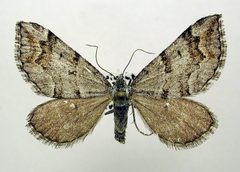
Chesiadini generally possess broad, somewhat triangular forewings with weakly falcate or rounded apices. Wing patterns typically consist of fine transverse lines and often include a distinct discal spot. are in both sexes. Genitalia characteristics, particularly the structure of the male valvae and female signum, provide definitive tribal assignment. Separation from related Larentiinae tribes requires examination of abdominal tympanal organs and wing venation patterns.
Images
Habitat
within Chesiadini occupy a range of temperate including grasslands, meadows, moorlands, open woodlands, and alpine zones. Many are associated with herbaceous vegetation in open or semi-open environments. Elevation ranges vary considerably, with some species restricted to lowland areas while others occur at high altitudes in mountainous regions.
Distribution
The tribe has a predominantly Holarctic distribution, with greatest diversity in the Palearctic region, particularly Europe and temperate Asia. Several extend into the Nearctic. Some genera show more restricted ranges: Chesias is primarily European, while Lithostege and Schistostege have broader Palearctic distributions.
Ecological Role
of many Chesiadini are documented of low-growing flowering plants in grassland . Larvae function as primary consumers, feeding on herbaceous vegetation and contributing to nutrient cycling in temperate plant .
Human Relevance
Some , particularly in the Aplocera, have been studied for their potential as indicators of grassland quality and climate change effects. No species are known to be significant agricultural pests.
Similar Taxa
- XanthorhoiniBoth tribes occur within Larentiinae and share similar wing shapes, but Xanthorhoini typically exhibit more pronounced wing pattern elements including stronger transverse bands and more contrasting ground colors.
- LarentiiniOverlaps in preference and general ; Larentiini often display more angular forewing apices and different male genitalia structures, particularly in the arrangement of cornuti on the .
More Details
Generic composition
The tribe includes 12 recognized : Amygdaloptera, Aplocera, Carsia, Chesias, Chesistege, Coenotephria, Docirava, Epiphryne, Lithostege, Odezia, and Schistostege. Generic boundaries have been revised based on molecular and morphological data, with Chesistege established relatively recently (1990) for previously misplaced in other genera.