
Aplocera
Stephens, 1827
treble-bar moths
Species Guides
1- Aplocera plagiata(Treble Bar)
Aplocera is a of geometer moths in the Geometridae, Larentiinae, comprising approximately 30 described distributed across the Palearctic region. The genus includes several well-known species such as Aplocera plagiata (treble-bar), Aplocera praeformata (purple treble-bar), and Aplocera efformata (lesser treble-bar). These are characterized by distinctive wing patterns with transverse dark bands, giving rise to their . Several species are declining in parts of Europe due to loss.

Pronunciation
How to pronounce Aplocera: /ˌæploʊˈsɪərə/
These audio files are automatically generated. While they are not always 100% accurate, they are a good starting point.
Identification
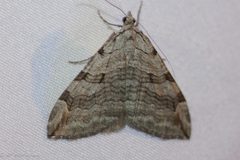
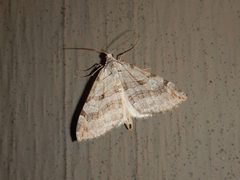
Members of this are recognized by forewings with three dark transverse cross-bands (the "treble-bar" pattern), though band intensity varies among . Aplocera efformata (lesser treble-bar) can be distinguished from the similar Aplocera plagiata (treble-bar) by its smaller size (forewing length 16–19 mm versus larger in A. plagiata), less intense dark cross-bands, lighter overall forewing coloration, and a shorter taper to the apex.
Images
Habitat
occupy hot, dry grasslands, primarily on sandy or calcareous substrates. Additional include sea-cliffs, woodland rides, abandoned quarries, field margins, and gardens.
Distribution
Palearctic distribution ranging from Morocco across southern and central Europe, extending eastward to Anatolia and northward to southern Scandinavia. Some have more restricted ranges.
Seasonality
fly during two per year. The overwinters as larvae, with occurring underground.
Life Cycle
with two periods annually. Larvae overwinter and pupate in the soil.
Behavior
are easily disturbed by day and readily fly when approached.
Human Relevance
Several serve as indicators of grassland quality; Aplocera efformata is noted as declining in Europe due to habitat loss, highlighting conservation concern.
Similar Taxa
- Aplocera plagiataSimilar wing pattern but larger with more intense dark cross-bands; distinguished from A. efformata by size, band intensity, and abdominal taper
More Details
Genome Resources
Aplocera efformata has been sequenced; the assembly spans 350 Mb with 32 chromosomal pseudomolecules including W and Z .