
Tetracis
Guenée, [1858]
Slant-Lines
Species Guides
11- Tetracis australis
- Tetracis barnesii
- Tetracis cachexiata(White Slant-line)
- Tetracis cervinaria
- Tetracis crocallata(Yellow Slant-line)
- Tetracis formosa
- Tetracis hirsutaria
- Tetracis jubararia(October thorn moth)
- Tetracis montanaria
Tetracis is a of geometrid moths in the Ennominae, established by Achille Guenée in 1858. The genus was revised taxonomically in 2010, when Synaxis was synonymized with Tetracis and three new western North American were described. It currently comprises 13 recognized North American species. The 'Slant-Lines' refers to characteristic wing patterns visible in many species.
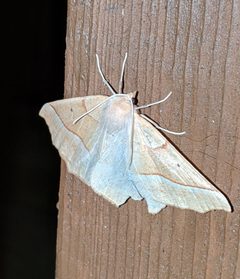
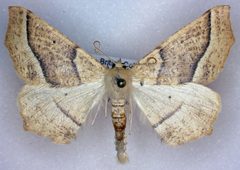
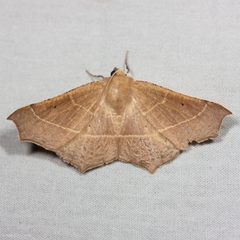
Pronunciation
How to pronounce Tetracis: /ˈtɛtɹəsɪs/
These audio files are automatically generated. While they are not always 100% accurate, they are a good starting point.
Identification
of Tetracis exhibit forewing patterns featuring distinct slanted transverse lines, from which the derives. The was historically confused with Synaxis; accurate identification requires examination of genitalic characters, particularly male valvae and female signum structures, as detailed in the 2010 revision. Species-level identification relies on wing pattern details, coloration, and geographic distribution.
Images
Distribution
North America, with distributed across the United States, southern Canada (including British Columbia), and Mexico. Three species (T. australis, T. montanaria, T. pallidata) are restricted to western North America.
Similar Taxa
- Synaxis (historical)Formerly treated as a separate , now synonymized with Tetracis based on shared genitalic and wing pattern characteristics; previously placed in Synaxis have been transferred to Tetracis
- Other Ennominae generaMay share superficial wing pattern similarities, but Tetracis is distinguished by specific genitalic and the combination of slanted forewing lines with particular venation patterns
More Details
Taxonomic revision
A 2010 revision (Ferris) synonymized Synaxis with Tetracis, excluded two previously misplaced in Synaxis (triangulata and brunneilinearia), and described three new species from western North America. Presumed lost types for T. aurantiacaria, T. cervinaria, and T. jubararia were rediscovered and illustrated.